
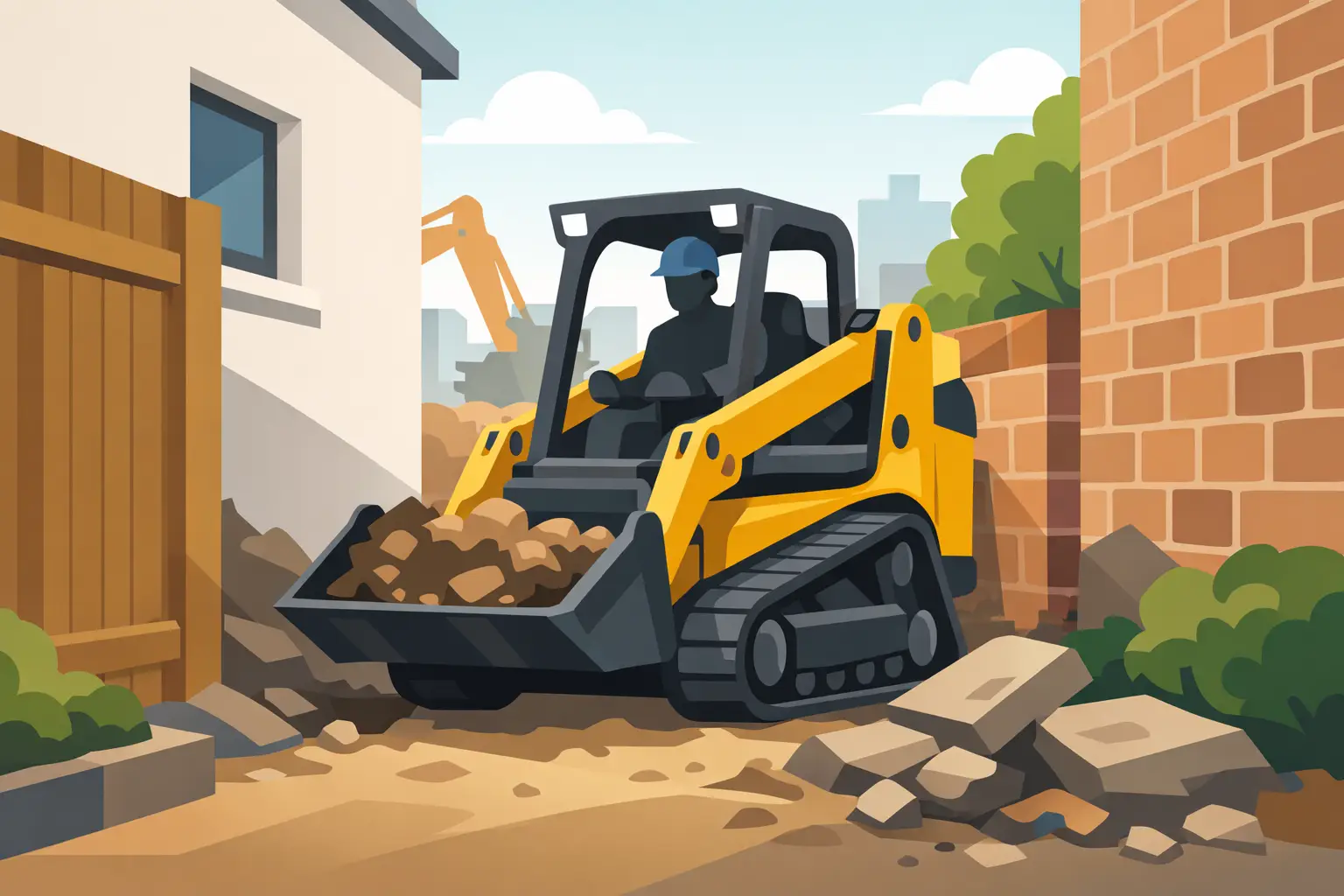
When the gate is narrow, the side path is tighter than expected, and there is no room to swing a full-size machine, mini loader hire for tight access stops being a nice option and becomes the only practical one. That is the point where the right machine saves hours of hand work, cuts down site fatigue, and keeps the job moving instead of stalling at access.
Tight access jobs are common across the Gold Coast. Backyard landscaping, new pool prep, plumbing trenching beside existing homes, footings in built-up suburbs, rubbish removal after demolition, and material movement through narrow entries all come with the same problem. The work itself may not be complicated, but getting equipment in and out without damaging fences, turf, paving or finished surfaces is where jobs can blow out.
Why mini loader hire for tight access makes sense
A mini loader earns its keep in places where larger gear is too wide, too heavy or simply too awkward. You still get the benefit of powered lifting, digging and shifting, but in a machine built to work in compact areas. That means less wheelbarrow work, fewer labour hours and a cleaner, quicker process from start to finish.
For many crews, hiring makes more sense than owning. Tight access work can be regular for some operators and occasional for others. If you only need a mini loader for selected jobs, tying up capital in another machine does not always stack up. Hire gives you the machine when you need it, without the servicing, storage and transport headaches sitting there between jobs.
There is also the issue of matching the machine to the task. Not every tight access site is the same. One job might need a unit narrow enough for a side gate, while another might need more lift capacity for soil, gravel or spoil. Hiring lets you choose the setup that suits the site rather than forcing one machine to cover every scenario.
Where a mini loader works best
Mini loaders are a strong fit for landscaping and construction work where access is limited but productivity still matters. Moving soil, mulch, crusher dust, sand and turf through a narrow accessway is an obvious one. So is shifting bricks, pavers, concrete rubble and spoil where a ute or larger loader cannot reach the drop point.
They are also useful for renovation and maintenance jobs around existing structures. If you are working beside a house, between retaining walls, around pools or along narrow boundaries, a compact machine reduces the amount of manual handling. That can make a real difference on jobs that need to be turned around quickly, especially when labour is already stretched.
For concreters and builders, mini loaders can help with site clean-up, moving base materials and handling prep work before the pour. For plumbers and civil crews, they are useful on trenching support and spoil removal in constrained areas. For serious DIY customers, they can turn a weekend of hard labour into a job that is actually manageable.
Tight access does not just mean width
Width is usually the first thing people think about, but it is only one part of the access problem. Height matters if you are working under carports, pergolas or low branches. Ground conditions matter if the site is soft, wet or recently disturbed. Turning room matters when the machine gets through the gap but has no space to manoeuvre once inside.
That is why mini loader hire for tight access should start with the actual site, not just the machine spec sheet. A gate measurement helps, but so does knowing the surface type, the slope, how far material needs to travel and whether the machine needs to work around existing landscaping or finished construction.
A compact machine that fits the entry but struggles on the terrain can still slow the job down. On the other hand, a unit with the right balance of size, traction and lift can make a difficult site feel straightforward.
Choosing the right mini loader for the job
The best hire choice depends on what you are trying to move and what sort of access you are dealing with. If the job is mostly material transport through a narrow side access, machine width and ease of operation are likely the priority. If you are loading out spoil or carrying heavier materials, operating capacity becomes more important.
Attachments can also change the value of the hire. A bucket setup may be enough for general earthmoving and clean-up, but some jobs benefit from specialised attachments depending on the material and finish required. This is where a quick conversation with experienced hire staff can save you from under-hiring or paying for more machine than you need.
There is always a trade-off. Smaller machines get into tighter spaces, but they may carry less per pass. Larger compact units can move more material faster, but only if the site gives them room to work. The best result usually comes from balancing access with output, rather than focusing on one factor alone.
Questions worth asking before you book
Before locking in a machine, it helps to be clear on a few basics. What is the narrowest point of access? What material are you shifting? How far does it need to travel? Is the ground firm enough to support the machine? Are there any surfaces that need protection?
Those answers make it easier to choose the right unit and avoid downtime on site. They also help with transport planning, especially if you are working to a tight schedule and need gear delivered or picked up around other trades.
What mini loader hire can save you on site
The obvious saving is labour. Jobs that would normally need multiple workers with barrows and shovels can often be handled by one operator and the right machine. That changes the pace of the day and frees up the crew for the rest of the work.
There is also less wear on the site. Repeated foot traffic, barrow runs and manual dumping can leave more mess than a compact machine doing controlled passes. On tight residential sites, that matters. Clients notice damage to lawns, edging, paving and access paths well before they notice how hard the crew worked.
Time is the bigger factor. If access is poor, small inefficiencies get multiplied quickly. Ten extra minutes per load becomes half a day before long. A mini loader reduces those repeat delays and helps keep the programme on track.
When hire beats making do with other gear
Some crews try to solve tight access with whatever is already on hand. That might mean labouring everything through by hand or using a machine that is close enough in size. Sometimes that works. Often it just creates frustration, extra clean-up and a slower job.
Making do usually costs more than it first appears. You lose time, increase manual handling and put pressure on the crew to make up hours somewhere else. On fixed-price work, that directly affects margin. On hourly work, it can affect client confidence if the job drags on for reasons that could have been avoided.
Hiring the right machine is often the simpler and cheaper call, especially when flexible hire periods are available. A short hire can cover a key stage of the job without committing to a full day if you do not need it.
Mini loader hire for tight access on residential sites
Residential work brings its own pressures. Access is usually tighter, neighbours are closer, and finished surfaces are more common. There is less room for error and less tolerance for unnecessary mess.
That is where compact, job-ready equipment becomes useful. You can get into the work area, move material efficiently and get back out without turning the site into a bigger problem than the task itself. For landscapers, renovators and maintenance crews, that can be the difference between a tidy job and a painful one.
On these sites, planning matters as much as the machine. Measure the access properly, think through the travel path, and allow for where material will be stockpiled or loaded out. A mini loader helps, but it still works best when the site is set up with a clear plan.
Get the machine sorted before the job slows down
Tight access jobs rarely get easier once work starts. If anything, delays become more expensive as other trades wait, clients ask for updates and the crew ends up stuck doing slow manual work. Getting the right mini loader organised early is usually the smarter move.
For Gold Coast contractors and hands-on project customers, Small Hire keeps the process straightforward – practical equipment, flexible hire options and staff who can help match the machine to the site. If the job is tight on space and tighter on time, it pays to sort the right gear first and get on with it.
The best machine for a tight access job is not the biggest one available. It is the one that fits, works hard and saves you from doing the same task the slow way all day.





Add comment