
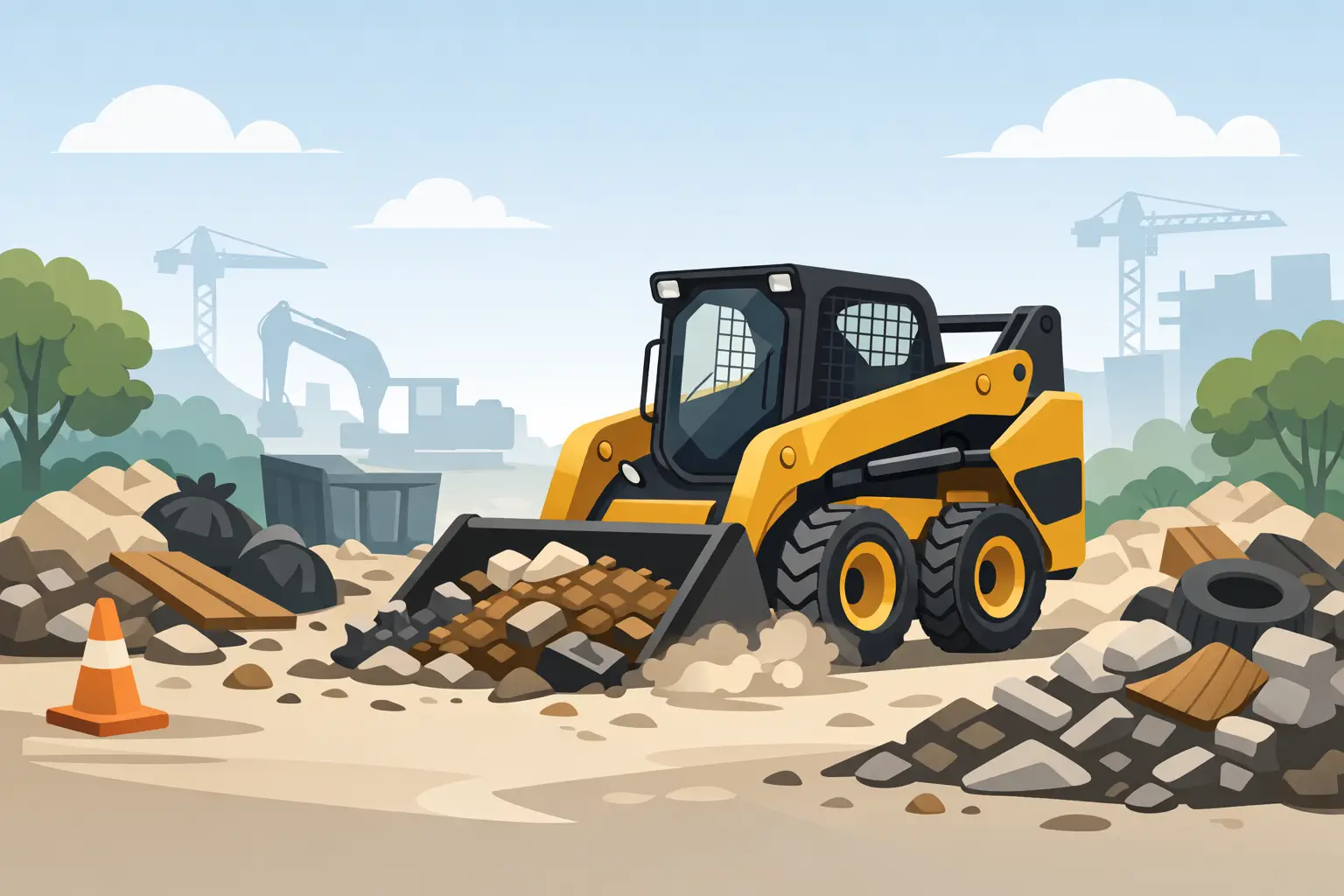
A cleanup job usually looks simple until the pile starts spreading. Broken concrete, spoil, green waste, mud, offcuts and loose rubbish can chew through labour hours fast, especially when access is tight and trucks are waiting. That is where skid steer hire for site cleanup makes sense – you get a compact machine that can load, shift and stack material quickly without tying up your crew on shovels and wheelbarrows.
For builders, landscapers, concreters and maintenance crews, cleanup is rarely just about making a site look tidy. It affects access, safety, scheduling and what can happen next. If the waste is still sitting where the last trade left it, the next stage slows down. A skid steer helps keep the site moving, but only if you hire the right machine for the material, access and ground conditions.
Why skid steer hire for site cleanup works
A skid steer earns its keep on cleanup because it handles a lot of small but time-heavy jobs well. It can load bins, move spoil to a stockpile, clear rubble from a demolition area, backfill around edges and shift wet or loose material that would otherwise take a crew half a day.
The big advantage is manoeuvrability. On residential builds, unit developments, commercial refurbs and landscape projects, space is often the real problem. A larger loader may have more capacity, but if it cannot turn cleanly, fit through access points or work near structures, capacity does not help much. A skid steer is compact enough to work in tighter areas while still giving you proper loading and carrying ability.
There is also the cost side. Buying a machine for occasional cleanup work rarely stacks up unless you are using it constantly. Hire keeps your overheads down and lets you match the machine to the job instead of making one machine do everything. For short cleanups, end-of-stage clear-outs or weekend pushes, flexible hire periods matter just as much as the machine itself.
What jobs suit a skid steer best
Site cleanup is a broad term, and that matters because not every mess behaves the same way. A skid steer is well suited to shifting spoil, sand, gravel, mulch, crushed concrete, green waste and general loose debris. It is also useful for loading out demolition leftovers once the larger pieces have been broken down or removed.
On landscaping jobs, a skid steer can clear old material, move new product into place and tidy the site at the end. On concreting jobs, it helps with formwork cleanup, rubble removal and backfill. On general construction sites, it is often the quickest way to deal with mixed waste piles and keep access routes open.
Where it depends is material weight and site layout. If you are dealing with heavy demolition waste, deep mud or large volumes across rough ground, another machine may be the better fit, or you may need a tracked option instead. The best cleanup hire is not the biggest machine available. It is the one that can work safely and efficiently on your site without constant repositioning or bogging down.
Choosing the right machine for the site
The first question is access. Width, gate openings, side setbacks, overhead obstructions and turning room all matter. A skid steer that looks compact in the yard can still be awkward once you add uneven ground, fencing and stacked materials around it.
The second question is surface condition. On firm, stable ground, a wheeled skid steer can be fast and efficient. On softer ground, disturbed fill or wet areas, a tracked machine may make more sense because it spreads weight better and keeps traction. If your cleanup is happening after rain or during earthworks, this can be the difference between finishing the job and making a bigger mess.
The third question is volume. If you are cleaning up one backyard or a small commercial frontage, a compact unit may be enough. If you are loading multiple bins or clearing a large lot, you will want enough bucket capacity and operating strength to avoid spending the whole hire period on repeat trips.
This is where experienced hire advice helps. A quick chat about the site, material type and access can save a lot of wasted time once the machine arrives.
Attachments matter more than most people think
For site cleanup, the bucket is usually the starting point, but it is not always the whole answer. A general-purpose bucket works well for spoil, rubble and loose waste. If the material is bulky or awkward, another attachment may speed things up considerably.
Forks can be handy for stacked waste, pallets of leftover material or shifting bundles out of the way before final cleanup. A 4-in-1 style bucket can also make sense on mixed sites because it gives more flexibility for grabbing, scraping and dozing as well as loading.
The trade-off is simplicity versus versatility. If the job is straightforward, too many attachment changes can slow you down. If the site has mixed tasks, the right attachment can turn one machine into a much more useful hire. It is worth planning this before pickup or delivery rather than trying to work around the wrong setup on site.
How to get faster cleanup from the hire period
Good cleanup is usually more about workflow than machine speed. If bins, trucks or stockpile areas are poorly positioned, even a capable skid steer will spend time travelling instead of loading. Before the machine starts, decide where material is going, how it will be separated and whether access routes will stay clear once the pile starts moving.
It also helps to stage the job. Clear bulky obstacles first, then strip loose material, then finish edges and tight corners by hand if needed. Trying to make the machine do every last detail can be slower than using it for the heavy work and letting the crew handle the final touch-up.
If the site is active, timing matters too. Cleanup during peak trade traffic can create hold-ups. A short hire window works best when the machine has a clear run, the material is ready to go and someone on site is coordinating truck or bin movements.
Safety and practical checks before you hire
Cleanup work can look low risk because it is not always seen as production work, but it still has the same site hazards. Underground services, unstable piles, sharp demolition waste, soft edges and poor visibility all need proper attention. The operator needs clear travel paths, enough room to turn and a solid understanding of where pedestrians and other plant are moving.
You should also check whether the machine is suitable for the transport method you have planned. Not every customer wants delivery, and not every trailer setup is right for the machine size. Weight, tie-down points and towing capacity all need to be sorted before the hire starts.
Fuel type, hire duration and operator familiarity are worth checking as well. A cheaper day rate is not much use if the machine is too small, the attachment is wrong or the crew loses time figuring out controls on site. Reliable, job-ready gear saves money because it saves hours.
When skid steer hire beats manual cleanup
There are still jobs where hand cleanup is enough. Small internal refurbs, minor garden strip-outs and tight spaces with no machine access may not justify plant hire. But once material starts piling up, labour-only cleanup gets expensive quickly.
A skid steer is usually the better option when you are loading bins, clearing spoil, removing heavy loose material or trying to turn around a site fast for the next trade. It is also a smart call when labour is better spent on skilled work rather than basic shifting and loading.
For many crews, the real value is not just speed. It is keeping the job on track. A delayed cleanup can hold up deliveries, inspections, reinstatement and handover. Hiring the right machine for a short window is often cheaper than carrying the delay through the rest of the program.
On the Gold Coast, where jobs move from tight residential sites to larger civil and landscape works, having access to the right equipment when you need it matters. If the cleanup is more than a few trailer loads and you want it done properly, it is worth lining up a machine that fits the site, the waste and the timeframe. A quick hire decision at the right time can save a full day of chasing the mess later.









Add comment