
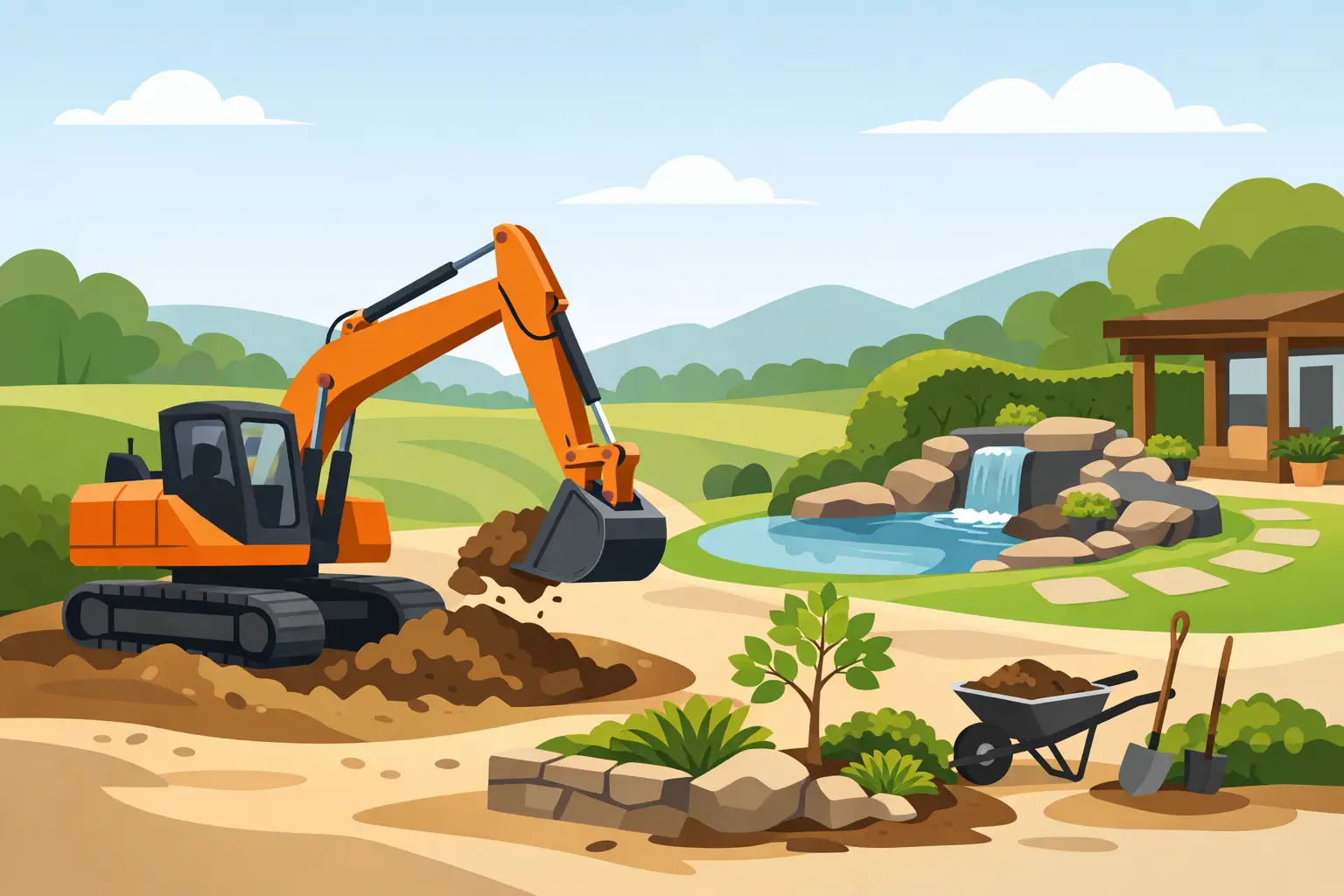
A landscaping job can go sideways fast when the machine is too big for the access, too small for the cut, or missing the attachment that actually gets the work done. That is why excavator hire for landscaping is usually less about simply booking a machine and more about matching the site, the scope and the timeline properly from the start.
For landscapers, builders and serious owner-builders, the right excavator can save days of hand work and keep the rest of the job moving. It can also create problems if the pick is wrong. Tight side access, soft ground, existing services and finished surfaces all change what makes sense on site.
Why excavator hire for landscaping makes sense
Most landscaping work is varied. One week it is trenching for drainage and irrigation, the next it is stripping turf, shifting spoil, cutting out for retaining walls or levelling around a pool. Buying a machine only stacks up if it is working regularly enough to justify the capital cost, servicing, transport and storage.
Hiring gives you flexibility. You can bring in the right size machine for the job at hand, use it hard for the period you need, then send it back. That matters when jobs are short, staged, or dependent on other trades. It also helps if you need a machine for a four-hour push, a weekend effort, or a slightly longer project where downtime is not an option.
There is also the question of attachments. Landscaping rarely calls for the same setup every time. A standard bucket might handle bulk excavation, but a trenching bucket, ripper or auger can be the difference between getting through the task cleanly and wasting half a day making do.
What landscaping jobs suit an excavator
Excavators earn their keep on a wide range of landscape and external works. They are commonly used for site cuts, trenching for stormwater and electrical runs, removing stumps, digging footings for retaining walls, post hole preparation, shaping batters and loading spoil into a tipper.
They also come into their own on jobs where hand labour would be slow or inconsistent. If you are cutting levels for a garden bed, preparing for exposed aggregate borders, removing old hardstand areas or cleaning up after demolition, a compact excavator can do accurate work without taking over the whole site.
That said, not every landscaping task needs one. If the site is extremely tight, the material is light, or you are mostly moving and spreading rather than digging, a mini loader or skid steer may be the better hire. On some jobs, the best outcome is a combination – excavator for digging and a tracked loader or tipper for carting and clean-up.
Choosing the right excavator size
This is where good hire advice matters. The smallest machine that can do the work is often the best choice for residential landscaping, but only if it still has enough digging depth, breakout force and reach for the job.
A compact or mini excavator suits tight access, backyards, side passages and finished residential sites where you need to minimise disruption. These machines are easier to place, easier to transport and generally kinder on existing surfaces. They are ideal for trenching, small footings, stump removal and light to medium excavation.
Larger excavators make more sense when the site is open, the material is heavier or the volume of digging is high. If you are bulk cutting, removing a lot of spoil or dealing with harder ground, going too small can be a false economy. You save a bit on hire, then lose it again in labour time and project delays.
The access question usually settles it. Measure gates, side clearances and turning areas before you book. Also think about height, not just width, especially if the machine needs to pass under carports, through framed openings or near low branches.
Attachments can make or break the job
A landscaping excavator is only as useful as the gear hanging off the arm. For general digging and loading, a mud bucket or GP bucket will cover plenty of work. For narrow service runs, a trench bucket gives a cleaner result with less over-dig. If you are working in compacted ground or pulling roots, a ripper can save time and strain on the machine.
Augers are another big one for landscaping. Fence posts, retaining wall uprights and planting holes all go faster when the right drive and bit are available. If you know the ground conditions are mixed, ask about what will suit clay, fill or rocky sections. The wrong attachment setup can turn a straightforward task into a stop-start mess.
This is one of the main advantages of hiring from a supplier that knows jobsite equipment, not just machine specs on paper. A quick conversation about the actual work often saves a second trip or a mid-job swap.
Site conditions matter more than most people think
Landscaping sites are rarely clean, empty pads. There are fences, finished driveways, service lines, neighbours, gardens that need to stay intact and access routes that are far from ideal. Before arranging excavator hire for landscaping, it pays to look at the full picture.
Ground conditions are a big factor. Wet or soft ground can limit where the machine can travel and where spoil can be stockpiled. Sloping blocks affect stability and machine choice. Existing underground services mean you may need to reduce excavation speed and change the sequence of work.
Then there is spoil management. Digging is only half the job. If there is no plan for where the material is going, the site can clog up quickly. On many landscaping projects, pairing the excavator with a tipper truck or loader keeps the job moving and reduces double handling.
Short hire or longer hire?
It depends on the pace of the project. If the site is ready, set-out is complete and the task is clear, a short hire period can be the most cost-effective option. A half-day or single-day booking suits trenching, small retaining wall footings, stump removal and similar focused tasks.
Longer hire periods make more sense when access is staged, weather is uncertain or the excavator will be used across several phases. That can include demolition, site prep, drainage, shaping and final tidy-up. Keeping the machine available can be cheaper than off-hiring and rebooking, especially when transport and scheduling are tight.
For trade customers, flexibility is often as valuable as the daily rate. Jobs move, other trades run late, and sometimes the machine is needed again after the initial cut. Hire terms that suit real project timing are worth paying attention to.
Getting better value from your hire
The cheapest machine on paper is not always the cheapest machine on the job. If it is underpowered, poorly matched or unavailable when you need it, the real cost shows up in labour and delays.
To get better value, have the basics ready when you enquire. Know the site access width, the type of material you are digging, the approximate depth and reach required, and whether you need attachments. If transport is part of the arrangement, have the site address and delivery conditions clear. If you are working in a finished residential area, mention that too.
It also helps to line up the rest of the workflow. Make sure spoil removal, set-out and any permits or service checks are sorted before the machine arrives. An excavator waiting around burns hire time without adding much value.
When to ask for advice
If the job includes limited access, deep trenching, retaining wall prep, rock, heavy clay or multiple attachments, it is worth talking it through before booking. The same applies if you are unsure whether an excavator is the best fit or if another machine would be quicker.
A good hire team should be able to narrow down the options based on the job, not just hand you a rate card. That matters on active worksites where the wrong call costs time. On the Gold Coast, plenty of customers hiring through Small Hire want exactly that – straightforward advice, reliable gear and hire terms that suit the way landscaping jobs actually run.
Landscaping is full of jobs that look simple until the machine arrives. Get the excavator, attachment and hire period right, and the work gets easier, faster and cleaner. If you are not sure what suits your site, ask early and book with the job in mind, not just the price.







Add comment