
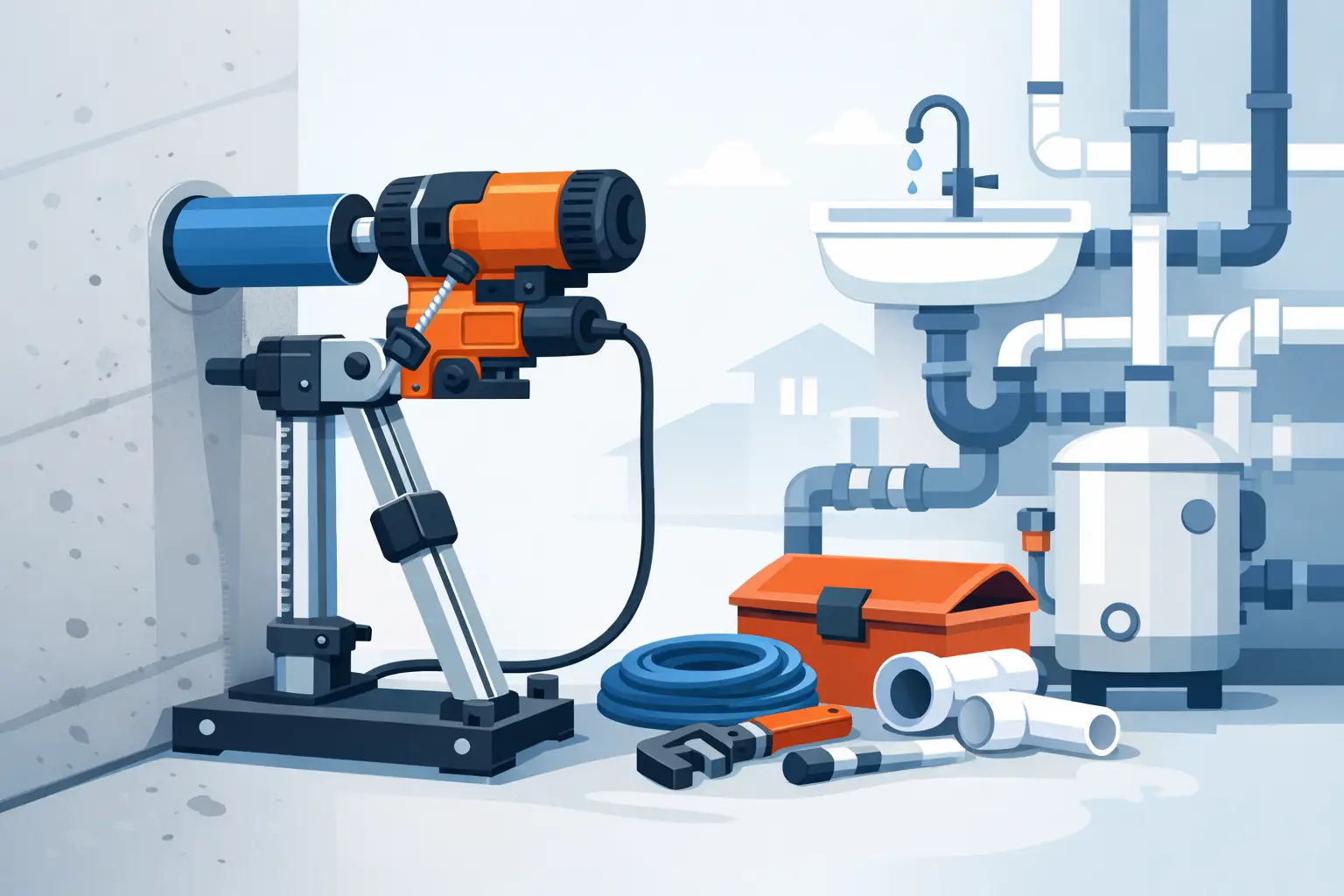
One bad penetration can slow a plumbing job for hours. Hit reo, chip the edge, drill the wrong diameter, or set up with the wrong rig, and what should have been a quick opening turns into patching, delays and a call back. That is why core drill hire for plumbing is less about simply getting a machine and more about getting the right setup for the slab, wall, pipe size and site conditions.
For plumbers, coring usually sits in that awkward category of work that has to be done properly but does not always justify owning the gear. If you are only cutting penetrations as needed across fit-outs, drainage work, renovations or service installs, hiring makes more sense. You get access to purpose-built equipment when the job calls for it, without tying up cash in a machine that spends most of its time in the shed.
When core drill hire for plumbing makes sense
Most plumbing penetrations need to be clean, accurate and quick. You might be drilling through a suspended slab for waste, coring blockwork for water services, or opening up a concrete wall for a new line in a commercial refit. In each case, the goal is the same – get through without blowing out the surrounding material and without making a mess of the finished area.
Hiring is usually the smart move when the coring is occasional, when the hole sizes vary from job to job, or when access changes across sites. A compact handheld unit may suit one task, while another needs a rig-mounted drill for control and consistency. If you buy one machine, you are often buying around your most common job, not every job. Hire gives you flexibility.
It also helps when timing matters. Plumbing crews do not want to lose half a day trying to make a general-purpose tool do specialist work. A proper coring setup cuts faster, tracks straighter and leaves a neater result, which matters when other trades are waiting on your penetration points.
What plumbers need from a core drill
A coring setup for plumbing is not only about power. The real issue is matching the drill, bit size and mounting method to the material and the opening required.
If you are running 50 mm, 80 mm or 100 mm pipework, the hole size needs to allow for clearance, sleeving and fit-off. That sounds simple, but the wrong bit size can leave you too tight on install or too loose for a tidy finish. On suspended slabs and structural walls, you also need to consider depth, reinforcement and whether wet coring is practical on site.
Handheld drilling can be useful for smaller diameters and lighter work, especially where speed and mobility matter. But once the hole size increases, or the material gets tougher, a rig-mounted unit is usually the better option. It gives you better alignment, less operator fatigue and a cleaner cut. That is often the difference between a straightforward penetration and a rough opening that needs remedial work.
There is also the question of access. In tight plant rooms, live refurb sites and occupied buildings, setup matters just as much as drilling capacity. A larger rig may have the grunt, but if you cannot position it properly, it will not help. This is where talking through the site conditions before hire saves time.
Choosing the right setup for plumbing penetrations
The best coring setup depends on four things – hole diameter, depth, substrate and working space.
For smaller service penetrations in masonry or lighter concrete, a more compact unit may be enough. It is quicker to move around and simpler to set up when you are punching through multiple locations in one day. For larger waste penetrations or repeated drilling through reinforced concrete, a dedicated rig with the correct stand and bit is the safer and faster option.
Water supply for wet coring also needs a bit of thought. Wet drilling keeps dust down and helps bit life, but not every site is easy to manage for slurry and runoff. On finished floors or internal work, containment becomes part of the job. If you are coring in a clean environment, ask about the most practical setup before you arrive on site with plastic sheeting and a wet vac as an afterthought.
Power supply is another one that catches people out. Some jobs are straightforward with standard site power, while others need you to think about load, leads and where the drill will actually be used. If access is awkward or the site is still early stage, planning that in advance keeps the crew moving.
Common mistakes that cost plumbers time
The biggest mistake is assuming all concrete coring gear is basically the same. It is not. A setup that works well for one penetration can be slow or messy on the next.
Another common issue is underestimating the bit diameter required. Plumbing penetrations often need room for lagging, sleeves or slight adjustment during install. If the hole is too tight, you can lose more time trying to make it work than you would have spent getting the right size from the start.
Then there is reinforcement. If the slab or wall is heavily reinforced, progress slows and bit wear increases. That does not mean the job cannot be done, but it does mean you want equipment suited to the task. Trying to push through with the wrong setup usually ends with frustration and a rougher result.
Poor positioning is another trap. If the hole location is tight against a wall, close to services, or overhead, setup accuracy matters. Coring is precise work when it is done properly. Rushing the marking out or choosing a machine that is hard to control in position often creates more work later.
Why hiring can beat owning for plumbing crews
For many plumbing businesses, ownership only stacks up if coring is a regular and predictable part of the workload. Even then, there is still the cost of bits, maintenance, storage and downtime when something is not job-ready.
Hiring keeps things simple. You bring in the equipment when you need it, match it to the specific task and move on once the penetrations are done. That is especially useful for smaller operators, maintenance crews and project plumbers who need specialist gear for short bursts rather than every week.
It also gives you access to advice. If you are dealing with an unusual slab, awkward access, or a penetration size you do not cut often, getting pointed toward the right machine can save a lot of trial and error. That practical support matters more than most people admit, particularly when the schedule is tight and the next trade is lining up behind you.
On the Gold Coast, where jobs can range from residential renovations to larger commercial and civil work, that flexibility is valuable. One week you might be on a bathroom renovation, the next on a services upgrade through thicker concrete. Hire lets you suit the equipment to the work instead of forcing the work to suit the tool you already own.
Getting better results from your core drill hire for plumbing
The crews who get the best value from core drill hire for plumbing usually do a bit of planning before pick-up. They know the substrate, expected depth, hole diameter and whether they are likely to hit heavy reinforcement. They also think about water management, access and power before they arrive on site.
That preparation helps in two ways. First, it means you are more likely to hire the right setup the first time. Second, it cuts down wasted labour on the day. There is nothing efficient about sending a plumber off site because the drill stand will not fit or the bit size is wrong.
It is also worth being realistic about the finish required. Some penetrations are hidden and purely functional. Others are visible, close to finished surfaces or part of a compliance-sensitive install. The cleaner the result needs to be, the less sense it makes to improvise.
If you are not sure what suits the job, that is the point of asking. A local hire team that deals with trade customers every day can usually sort out whether you need a handheld unit, a rig-mounted system, a different bit size or a better plan for site setup. Small Hire works with project-based customers who need gear that is ready to go and suited to the job, not a one-size-fits-all answer.
Plumbing work moves fast when each part of the job is set up properly. Coring is no different. Get the right machine, the right bit and the right advice, and the penetration becomes just another task ticked off instead of the part that holds everything up.









Add comment