
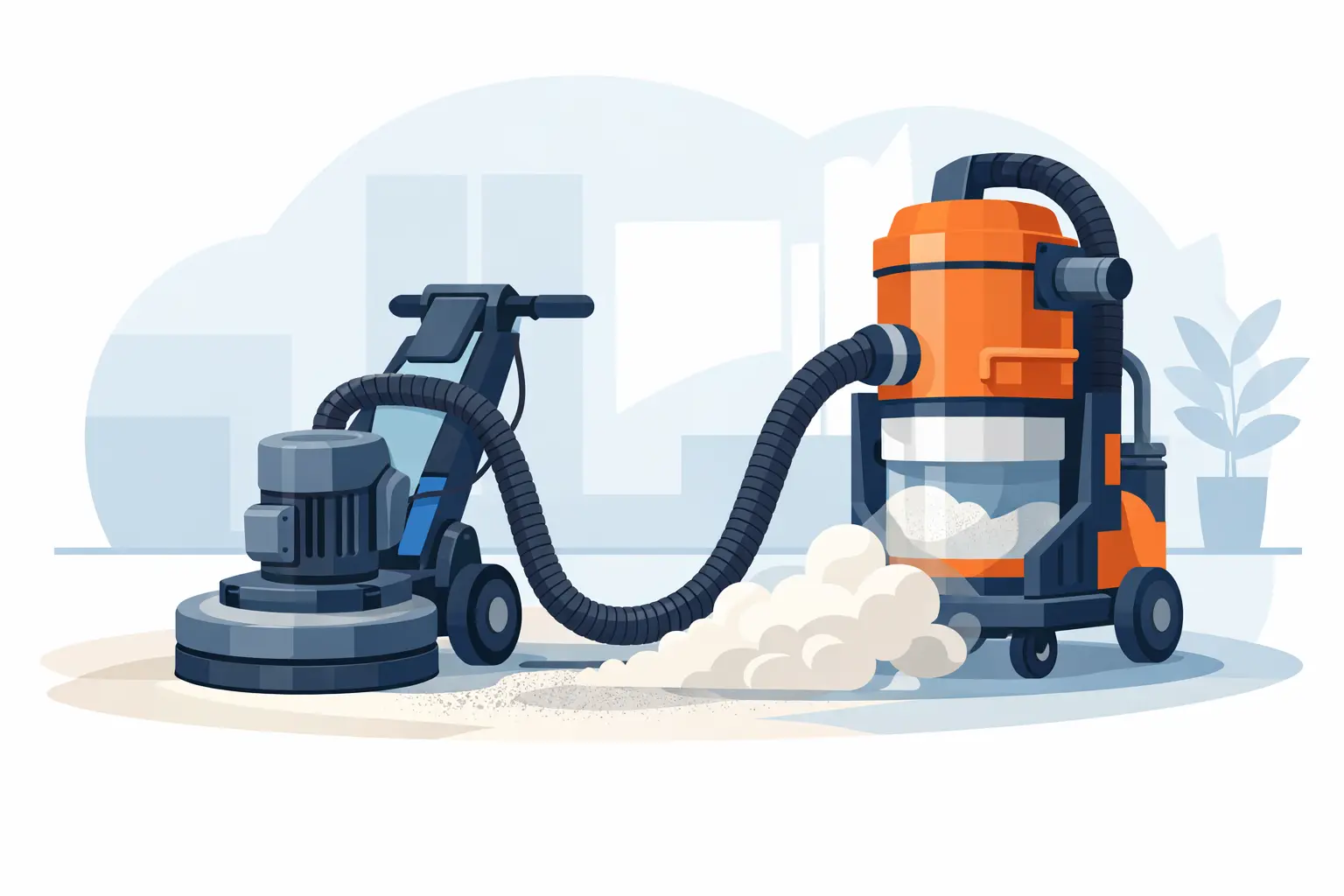
Concrete dust gets everywhere when the setup is wrong. It slows the job, creates extra clean-up, and turns a straightforward grind into a mess across the slab, tools, and surrounding work area. That is why floor grinder dust extractor hire matters – not as an add-on, but as part of getting floor prep done properly from the start.
If you are grinding concrete, removing coatings, smoothing high spots, or preparing a surface for epoxy, polishing, or adhesives, the extractor needs to match the grinder and the job size. Too small and it struggles to keep up. Too big and you can end up paying for capacity you do not need. The right hire setup keeps dust down, helps visibility while grinding, and saves time at the end of the day.
Why floor grinder dust extractor hire makes sense
For most contractors and project customers, hiring makes more sense than owning. Dust extraction gear is specialised, and the right unit for one slab is not always the right unit for the next. A small indoor patch repair, for example, has different requirements to a larger warehouse floor or a full coating removal job.
Ownership only stacks up if you are using the equipment regularly and know exactly what capacity you need. Even then, storage, transport, filter maintenance, and downtime all come into it. Hiring gives you access to job-ready equipment when you need it, without tying up cash in a machine that might sit idle between projects.
There is also the practical side. When you hire, you can pair the extractor with the grinder you are using rather than trying to force one machine across every application. That usually means better performance and fewer headaches on site.
What the extractor actually needs to do
A dust extractor for floor grinding is not just a vacuum. It needs to pull fine concrete dust continuously while the grinder is working and hold suction across the job, not just for the first ten minutes. Fine dust is the issue here. It is lighter, more persistent, and harder to manage than general site debris.
Good extraction helps in a few ways. First, it keeps the work area cleaner and easier to move through. Second, it improves line of sight on the slab, which helps you see scratch pattern, remaining coating, or uneven spots as you work. Third, it reduces the amount of dust settling into adjacent areas, which matters even more on internal jobs, tenancies, maintenance work, and occupied sites.
Performance depends on airflow, filtration, collection capacity, hose setup, and how well the extractor matches the grinder head and work rate. If one part of that setup is off, the whole job feels slower.
Matching floor grinder dust extractor hire to the job
The best hire choice depends on three things – grinder size, material being removed, and site conditions.
A smaller grinder used for edge work, patching, or tight residential access usually does not need the same extractor as a larger planetary grinder working a broad commercial slab. If you are only knocking down high spots or doing light prep, a compact setup may be enough. If you are removing thick coatings, glue residue, or running aggressively across a bigger area, dust volume rises quickly and the extractor needs to keep pace.
Site conditions matter just as much. Indoor work generally calls for tighter dust control because there is nowhere for that dust to go except into nearby rooms, fixtures, and air movement systems. On external jobs, you still want proper extraction, but wind, access, and surface contamination can affect what setup works best.
The practical question is not just, “Will this extractor work?” It is, “Will it keep up for the full hire period without slowing the crew down?” That is where experienced advice saves time.
Small jobs versus larger floor prep work
For a small repair or short-duration prep job, hiring a compact grinder and extractor can be the most cost-effective option. It is easier to transport, quicker to set up, and often enough for a single room, threshold, garage slab, or localised coating removal.
For larger floor prep work, underpowered extraction usually shows up fast. Filters load up, suction drops away, and dust starts escaping around the grinder skirt. At that point, the job gets slower and the clean-up bill grows. On bigger areas, stepping up to a more capable extraction unit is usually money well spent.
Wet or dry grinding changes the setup
Most people asking about dust extractor hire are doing dry grinding, because that is where extraction is critical. Wet grinding changes the equation. It can reduce airborne dust, but it creates slurry instead, which then needs managing, collecting, and disposing of properly. That can suit some applications, but it is not automatically cleaner or faster overall.
If the job is internal or turnaround time matters, dry grinding with the right dust extraction is often the cleaner and more efficient option. If the slab condition or finish requirement points toward wet work, you need to plan for slurry handling rather than assume the problem has disappeared.
What to ask before you hire
A quick chat before pickup can save a lot of stuffing around later. The main details are simple – what grinder you are using, how large the area is, what material you are removing, whether the job is internal or external, and how long you expect the work to take.
That information helps narrow down the right extractor size and hose setup. It also helps flag any transport or power considerations. Some customers are set up for a larger machine and some need something easier to move through a house, tenancy, or lift access site. There is no point hiring the perfect machine on paper if it is awkward to get into position.
It is also worth asking about hire periods. On short jobs, a 4-hour rate can be good value. On longer prep work, a weekend or multi-day option may suit better. The best arrangement depends on whether you are trying to finish a small section fast or stage work across a bigger project.
Common mistakes that slow the job down
The first mistake is treating the extractor like an optional extra. It is part of the grinding system. Without it, visibility drops, dust spreads, and cleanup drags on.
The second is choosing purely on price without considering output. A cheaper, smaller unit can end up costing more if the crew loses time managing dust or making repeat passes because the slab is not clearly visible.
The third is underestimating how much dust coating removal creates. Removing paint, adhesives, sealers, and old finishes can load an extractor differently to bare concrete grinding. If the job involves heavy removal, say so upfront.
Another common issue is not thinking through power supply and access. If the machine is right but the site setup is poor, you still lose time. A practical hire decision looks at the whole job, not just the machine spec.
Hiring for speed, not just availability
Good equipment hire is about getting moving quickly and finishing cleanly. For floor prep work, that means the grinder and extractor should arrive ready for the task, with the right advice behind them. Reliable hire saves you from trying to make do with the wrong setup halfway through the day.
That is especially important for trade customers juggling multiple tasks on a live schedule. If grinding is only one part of the project, delays flow straight into coatings, fit-off, handover, or the next crew coming in. Cleaner grinding helps the whole sequence run better.
On the Gold Coast, project timelines are often tight and access windows can be even tighter. Hiring from a local team that understands floor prep work makes the process more straightforward. Small Hire supports customers with practical equipment advice, flexible hire options, and gear that is ready to go when the job is.
Is floor grinder dust extractor hire worth it for DIY customers?
For serious DIY customers, yes – especially if the job is inside the house, garage, or a renovation area where dust spread becomes a real problem. Buying an ordinary vacuum and hoping for the best is usually false economy. Fine concrete dust is not something you want moving through the property or settling onto finished surfaces.
That said, not every DIY project needs the biggest setup available. If the area is limited and the task is straightforward, a compact hire package may do the job well without overcomplicating things. The key is being honest about the slab condition and what you are trying to achieve.
If you are unsure, the safest move is to explain the job properly before booking. A few minutes spent choosing the right floor grinder dust extractor hire setup usually saves hours of frustration once the grinding starts.
The best hire is the one that keeps the dust under control, the slab visible, and the job moving without drama.









Add comment