
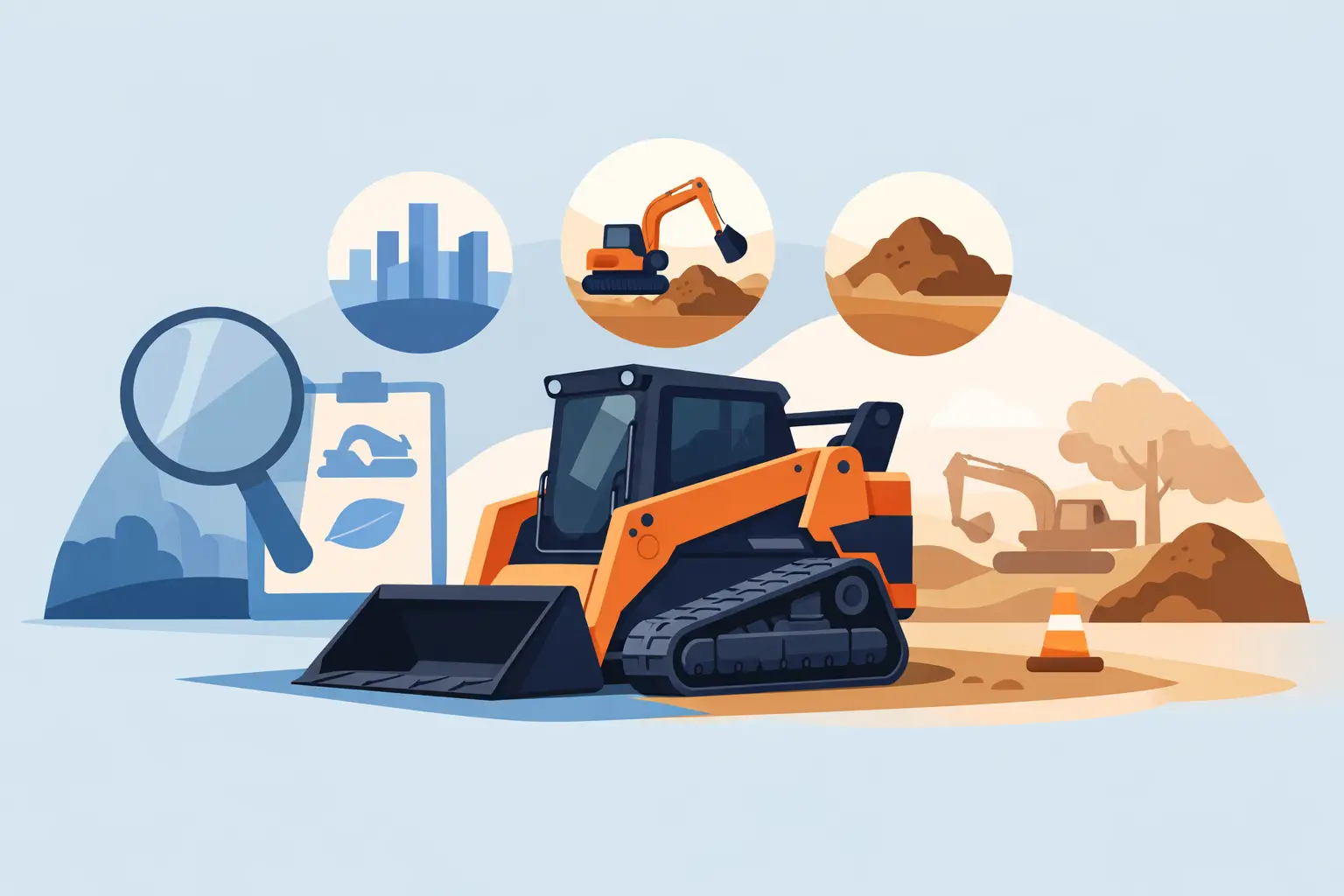
When the site is tight, the ground is soft, and you still need to move fast, knowing how to hire a posi track properly can save you a lot of grief. Get the machine size wrong, miss an attachment, or overlook access, and a simple hire can slow the whole job down. Get it right, and you move material quicker, clean up faster, and keep the project on track.
A posi track is one of those machines that earns its keep across a wide range of work. Landscapers use them for site cuts, turf prep and moving soil. Builders and concreters use them for clean-up, backfill and general site handling. Civil and maintenance crews use them where traction matters and conditions are less than ideal. That versatility is exactly why it pays to think through the hire before the machine lands on site.
How to hire a posi track without wasting time
The quickest way to sort out a posi track hire is to start with the job, not the machine. Most problems happen when people book based on what looked fine on another site, rather than what this job actually needs. A narrow residential block, a wet backyard, a sloping site, or a commercial clean-up all call for different setups.
Start by working out what the machine needs to do for most of the hire period. If the main task is shifting spoil, mulch, gravel or debris, that points you one way. If you need to spread topsoil, level ground, load out bins, or work over softer terrain, that can change the size and attachment you need. A posi track is versatile, but it still performs best when it is matched to the work.
The next step is access. This matters more than many people expect. If the machine cannot get through the gate, around the house, under a carport, or across sensitive ground without causing damage, the hire becomes a headache fast. Measure the narrowest points properly and think about turning space as well, not just straight-line entry.
Then consider the surface conditions. Tracked machines are often the better option where tyres would struggle, especially on loose, muddy, sandy or uneven ground. That said, tracks are not a free pass for every surface. Finished lawns, decorative paving and delicate areas still need care. If the site is soft but the finish matters, mention that when booking so the best option can be recommended.
Pick the right size for the work
A bigger machine is not always the better hire. More power and capacity can help on larger jobs, but extra size can also make access harder, increase ground impact, and reduce manoeuvrability in tight areas. On residential work, the right compact machine often gets more done simply because it fits where it needs to go and turns easier.
On the other hand, hiring too small can be just as costly. If the machine is underpowered for the material you are moving or the volume you need to shift, you lose time every hour. Wet clay, heavy rubble and repeated loading work can quickly show up the limits of a small unit.
If you are unsure, the best approach is to describe the material, the site, and the job volume clearly. Saying you need to move fill is less helpful than saying you need to move around 20 cubic metres of damp soil from the front setback to the rear yard through a side access. That sort of detail makes it much easier to match the right posi track to the work.
Think about operating height and reach
It is easy to focus only on width and bucket capacity, but lift height matters too. If you are loading a truck, filling a skip, or working against retaining walls or stockpiles, the machine needs enough reach and dump height to do the job efficiently. A machine that can move material but cannot load where you need it loaded is not much use.
Choose the attachment before you book
A posi track on its own is only part of the setup. The attachment often makes the difference between a productive hire and a slow one. For general earthmoving and site clean-up, a standard bucket may be enough. For levelling and spreading, a 4-in-1 bucket can give you much better control. On some jobs, forks, augers or specialist attachments may be the smarter choice.
This is where many hirers lose time. They hire the machine first, then realise halfway through the day they needed a different attachment to finish properly. If you know the work involves grading, trench backfilling, pallet movement or post hole digging, raise it at the start.
Attachments also affect how the machine performs on site. A setup that is perfect for bulk movement may not be ideal for finer finishing work. If the job has two distinct stages, it can be worth discussing whether one machine setup covers both or whether there is a better way to stage the hire.
Check transport, site timing and hire period
A good hire is not just about the machine. It is also about when it arrives, how long you need it, and whether the timing lines up with the rest of the job. There is no point having a posi track booked for first thing if the demolition crew is still on site, the materials have not been delivered, or the area is not ready to work.
Be realistic about the hire period. Short hire windows can be great value when the site is organised and the task is clear. If there is any chance of delays from weather, other trades or site access, building in a bit more time can take the pressure off. It depends on the job. For a quick clean-up or small prep task, a 4-hour hire might be enough. For bulk movement, reshaping or multi-stage work, a full day or longer is often the safer call.
Transport also matters. Some customers have the means to move machinery themselves, while others need delivery and pickup arranged. If you are planning to tow, make sure the vehicle, trailer and legal requirements are all sorted. If not, organise delivery so the machine gets to site safely and on time.
How to hire a posi track for wet or tricky ground
Posi tracks are popular for a reason on difficult ground. They spread weight better than wheeled machines and usually offer stronger traction where surfaces are soft or uneven. That can make them a practical choice after rain, on sandy blocks, or on sites with loose fill.
Still, wet ground changes the job. Material gets heavier, loading takes longer, and even a tracked machine can mark up the site if it is pushed too hard. If preserving the surface is part of the job, say so upfront. There is a difference between needing access across soft ground and needing a neat result once the machine is done.
Steep areas, side slopes and confined work zones also need proper planning. If visibility is limited or the operating area is awkward, that should be part of the hire discussion. A machine might technically fit, but that does not always mean it is the most efficient or safest option for the work.
Ask the practical questions that affect the job
The best hire conversations are straightforward. Explain the site, the task, the access and the timing, then ask the questions that actually affect the day on site. Is this the right size for the access point? Which attachment suits the work best? How long should this job reasonably take with the machine? What hire period makes sense? Can it be delivered when the site is ready?
If you are comparing machines, do not just compare day rates. A cheaper hire that takes longer, cannot handle the ground, or needs an attachment change halfway through can cost more in the end. Value is about getting the work done properly and without delay.
For Gold Coast jobs, local knowledge can make a real difference too. Residential access, soft coastal ground, sloping sites and tight suburban work areas are all common enough that it helps to deal with a team that understands the practical side of local projects. That is often where a straightforward chat saves more time than scrolling through specs on your own.
Know when a posi track is the right choice
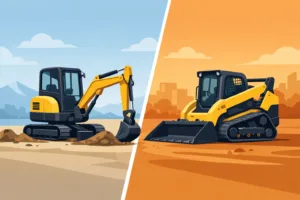
A posi track is a strong option when you need compact size, solid traction and all-round site handling. It suits landscaping, site prep, earthmoving support, clean-up and material movement across a lot of trade work. But it is not automatically the right machine for every job. If you need deeper digging, longer reach, or truck loading from below grade, an excavator may be the better fit. If the work is mostly on firm flat surfaces with repeated pallet handling, another machine may be more efficient.
That is why the best way to approach the hire is to be clear about the result you need, not just the machine name. Once the job is defined properly, the right equipment choice becomes much easier.
If you want the hire to go smoothly, keep it simple – know the task, measure the access, think through the ground conditions, and sort the attachment before the machine arrives. If you are unsure, a quick call to experienced staff at Small Hire is usually faster than guessing, and it gives you a better chance of finishing the job without losing half a day fixing the wrong booking.





Add comment