
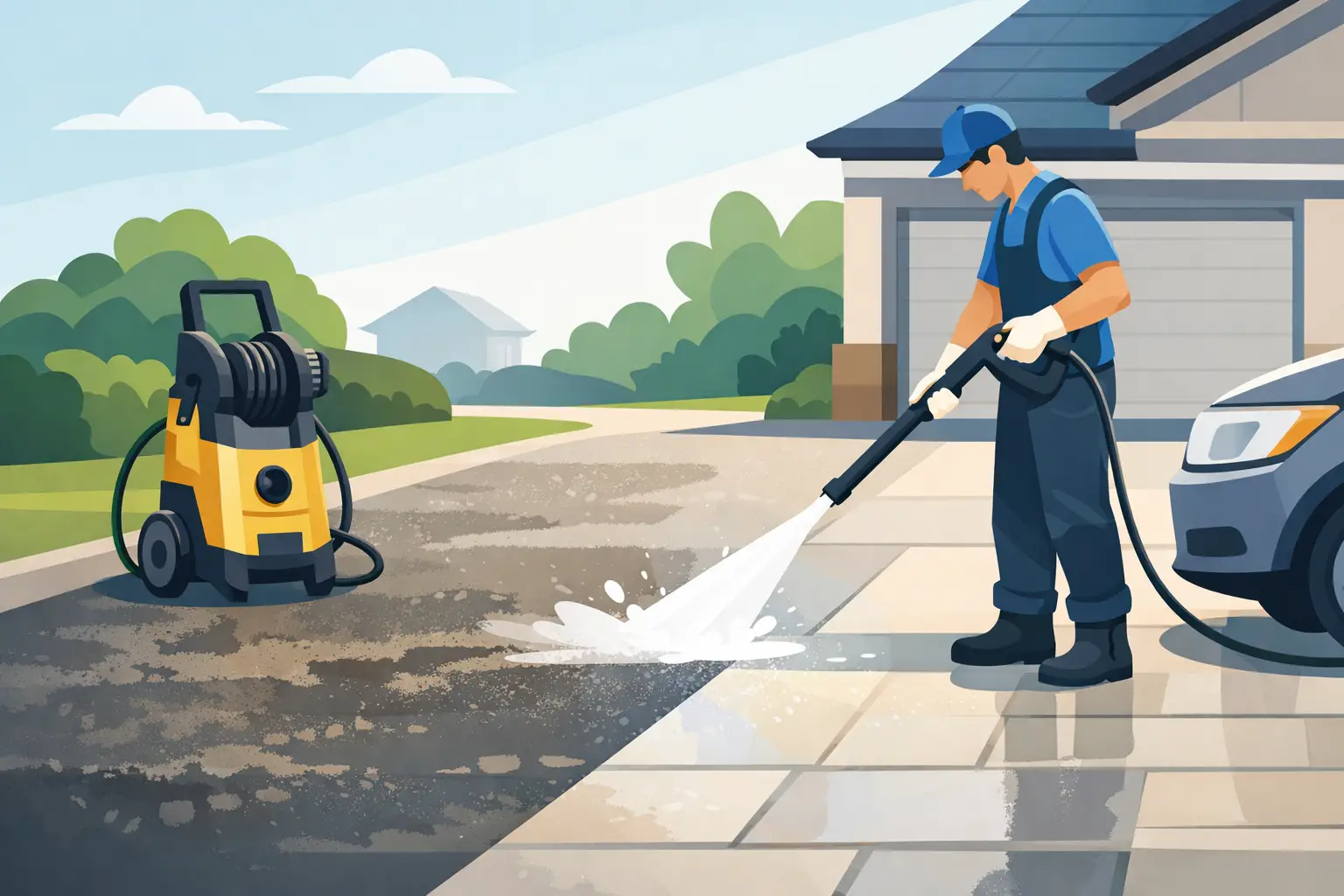
A driveway can make the whole front of a property look tired long before anything else does. Built-up dirt, black mould, tyre marks and slippery grime do not take long to show up on concrete, exposed aggregate or pavers. That is why pressure washer hire for driveways is often the quickest way to lift the presentation of a home, rental, body corporate site or commercial entry without paying for a machine that only gets used now and then.
For most jobs, hiring makes more sense than buying. A decent pressure washer has enough power to get through years of grime, but it also needs to suit the surface, the size of the area and the water supply on site. Get that wrong and you can waste half a day, or worse, mark the surface you were trying to improve.
Why pressure washer hire for driveways makes sense
Driveway cleaning looks simple until you are halfway through with a machine that is too small. Light domestic units can be fine for outdoor furniture and the odd bit of footpath, but a stained driveway usually needs more pressure, better flow and more consistent performance than bargain gear can offer.
Hiring gives you access to proper equipment for the job without the upfront cost, storage hassle or ongoing maintenance. If you only need the machine for a few hours, a day or a weekend, it is hard to justify buying one outright. For contractors and maintenance crews, hire also helps when your own machine is booked elsewhere, under repair or just not the right spec for the surface.
There is also the practical side. Different driveways need different approaches. A flat concrete crossover at a suburban home is not the same as a steep exposed aggregate driveway at a unit complex. Pavers with sand joints need more care than plain concrete. When you hire from a team that knows equipment, you are more likely to end up with a machine that suits the job rather than one that simply sounds powerful on paper.
What a pressure washer needs to handle on a driveway
Most driveway cleaning jobs are dealing with a mix of surface dirt and embedded contamination. Dust and mud are the easy part. The harder part is built-up algae, mould, oil drips, rust stains, leaf tannins and old tyre marks. Some of these lift with pressure alone. Some need detergent, a pre-treatment or a slower methodical pass.
This is where pressure and water flow both matter. People tend to focus only on pressure, but flow is what helps carry dirt away and clean efficiently. A machine with strong pressure but poor flow can still feel slow on a wide driveway. On larger jobs, that extra cleaning rate matters.
Surface type matters just as much. Standard concrete is usually more forgiving. Exposed aggregate needs care because aggressive cleaning can dislodge loose stones or leave patchy results if the operator gets too close. Pavers can be cleaned well with pressure, but too much force can strip jointing sand and create extra remedial work afterward.
Choosing the right pressure washer hire for driveways
The right machine depends on three things – surface, size and level of staining.
For a small residential driveway with light dirt and mildew, a mid-range unit may be enough. For a larger driveway, heavily stained concrete or commercial hardstand areas, a more powerful machine will save time and deliver a more even finish. If the site has awkward access, hose length and manoeuvrability become part of the decision too.
Petrol units are often the practical choice when you need mobility and solid output, especially where power access is limited. Electric machines can still suit some smaller jobs, but on active sites or larger outdoor areas, petrol pressure washers usually give you more freedom and faster results.
If you are unsure, it is worth asking a hire team what the driveway is made from, how big it is and what sort of staining you are dealing with. That five-minute conversation can save a lot of stuffing around once you get to site.
Getting better results without damaging the surface
A good clean is not about using the highest pressure possible. It is about using enough pressure to remove contamination without etching, striping or blowing out the surface.
Start with a test patch in a less visible area. That gives you a read on how the driveway responds before you commit to the full job. Keep the nozzle moving and avoid holding a tight spray in one spot. On concrete, inconsistent wand distance is what often causes those zebra-like clean lines that make a job look rushed.
Oil stains can be stubborn. Pressure helps, but it often works best after a degreaser has had time to break down the contamination. Mould and algae may also need treatment first, especially on shaded driveways that stay damp. If you skip that step, the surface might look cleaner on the day but stain back quickly.
For pavers, a lighter touch is usually the smarter call. Once cleaned, some areas may need re-sanding to restore the joints. That is not a sign the job went badly. It is just part of cleaning that type of surface properly.
Common mistakes on driveway cleaning jobs
The most common mistake is hiring too small. People try to save a few dollars, then spend twice as long on the job and still get an average result. Time matters, especially for tradies fitting the work around other tasks.
The second mistake is using too much pressure on the wrong surface. Concrete can be marked. Pavers can be disturbed. Decorative finishes can lose their uniform look. More force is not always better.
The third is poor site prep. Loose rubbish, leaves and heavy debris should be cleared before washing starts. If not, you are just pushing mess around with water. It also helps to think about runoff. Dirty water needs somewhere to go, and on some sites that affects how you set up and work through the area.
Another issue is expecting pressure washing to fix every stain completely. Some old oil marks, deep rust or permanent discolouration may improve rather than disappear. A realistic expectation is a cleaner, safer and far better presented driveway, not necessarily a brand-new slab.
Who usually hires a pressure washer for driveway work
This type of hire is not just for homeowners. Landscapers use pressure washers to finish off external works. Builders and renovators need them for handover clean-ups. Property managers use them to tidy entries between tenants. Maintenance crews rely on them for regular cleaning around unit blocks, shops and shared access areas.
Serious DIY customers also hire them when a driveway clean has been on the list for too long and a basic domestic machine is not going to cut it. The value is in getting proper gear for a defined job, using it hard, then returning it when the work is done.
On the Gold Coast, driveways also cop plenty of weather exposure. Humidity, rain and shade all help mould and grime build up faster, especially in coastal areas and on southern sides of properties. That makes periodic cleaning less of a cosmetic extra and more of a practical maintenance job.
When hiring beats owning
If you clean driveways every week, ownership might stack up. For everyone else, hire is usually the better value. You avoid capital cost, servicing, storage and the frustration of dragging out a machine that has not been started in months.
Hire also gives you flexibility. One week you might need a pressure washer for a driveway. Next week it could be a trailer, a generator or another piece of equipment to finish a different part of the job. That is where a local hire yard with a broad range can make life easier. Small Hire works with plenty of customers who need that sort of practical, job-to-job flexibility rather than a permanent machine sitting in the shed.
Before you book your driveway pressure washer hire
Have the basics ready. Know the driveway size, the surface type, how bad the staining is and whether you have easy access to water on site. If access is tight, mention it. If the driveway is steep or heavily soiled, mention that too. The more accurate the information, the easier it is to match the machine to the job.
Also think about timing. A four-hour hire can be enough for a straightforward driveway if you are set up and ready to go. A larger or more detailed clean might justify a full day or weekend hire, especially if you want time for pre-treatment and a slower finish.
A clean driveway changes the look of a property quickly, but the real benefit is getting it done properly without wasting time on underpowered gear. If you hire the right pressure washer from the start, the job is simpler, faster and a lot less frustrating.







Add comment