
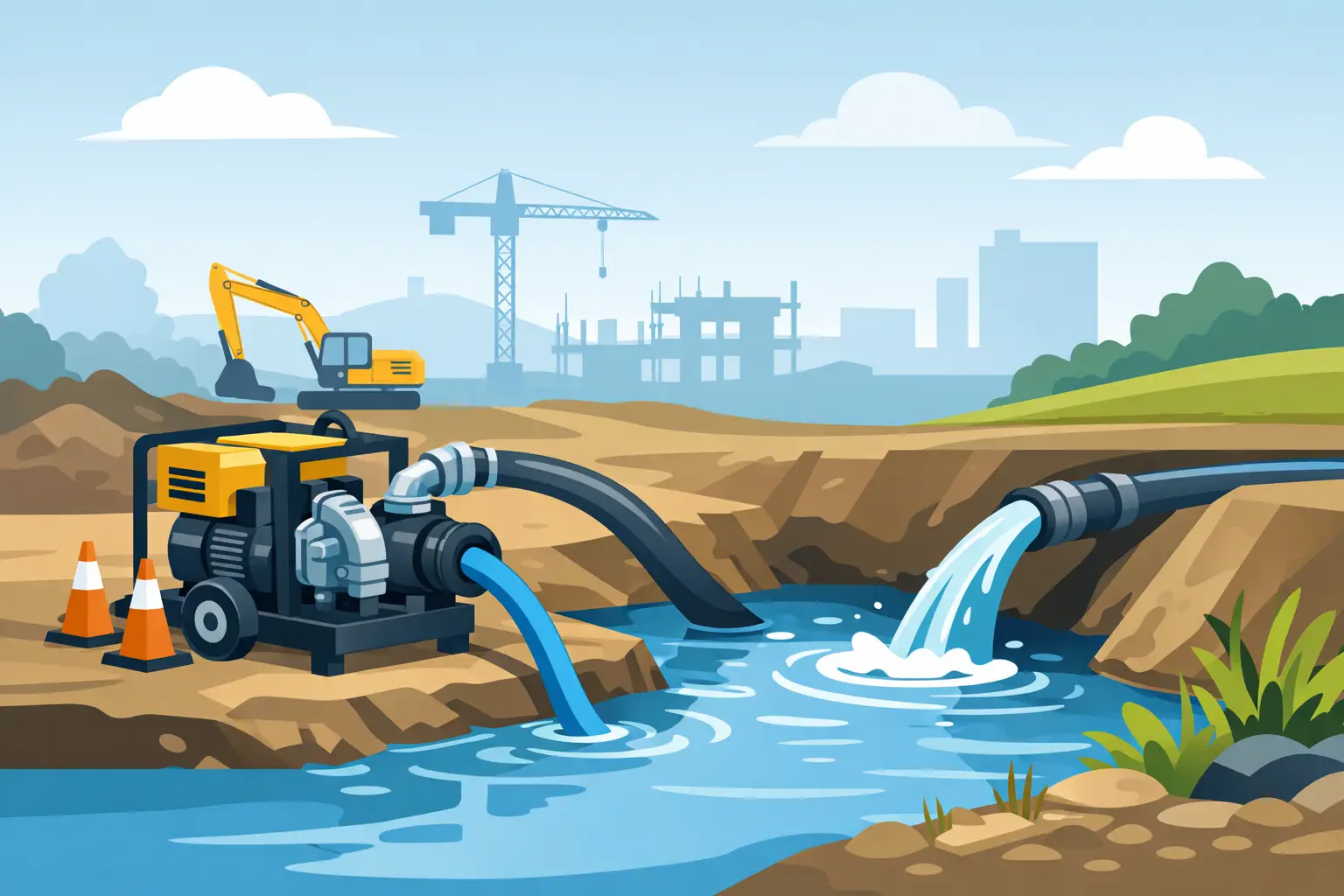
A wet site can chew through time fast. One decent downpour, a burst line, or groundwater pushing into a trench is enough to stop excavation, delay concrete, bog machines and turn a straightforward job into a mess. That is where pump hire for site drainage makes sense – you get the right gear for the conditions on site without tying up cash in equipment you might only need for part of the job.
On active sites, drainage is rarely just about moving water from one spot to another. The type of water matters. Clean water from rain sitting in a low area is one thing. Dirty water full of silt, slurry or small debris is another. If you pick the wrong pump, you can end up with blockages, poor flow, extra labour and more downtime than the water caused in the first place.
When pump hire for site drainage is the right call
Buying a pump can make sense if drainage is part of your day-to-day work. For plenty of builders, landscapers, plumbers, civil crews and owner-operators though, hire is the better option. You use the pump when the site needs it, return it when the job is done, and avoid storage, servicing and maintenance between jobs.
That matters most when conditions change from project to project. One week you might need to clear stormwater from a trench. The next, you are dealing with muddy run-off around a slab prep. A pump that suits one task will not always suit the next. Hiring gives you flexibility, especially when the site throws up something different from what was expected.
Speed is the other big reason. If water is holding up work, you do not want to spend half a day trying to make do with whatever is lying around in the shed. Getting the proper pump onto site quickly keeps trades moving and helps protect your schedule.
Not all water is the same
The biggest mistake on drainage jobs is treating all water as clean water. It is not. Site water often carries sand, silt, clay, leaves, grit and small aggregate. In some cases, it can be thick enough that a basic transfer pump struggles or clogs.
For cleaner water, a straightforward water transfer pump may be enough. These are useful when you need volume and the water is relatively free of solids. They are common on general dewatering tasks after rain, around pits, or where water has pooled on a reasonably clean surface.
If the water is dirty, a trash pump is usually the smarter choice. These pumps are built to handle solids and heavier contamination without constant blockages. On construction and earthmoving sites, that can make all the difference. You are not just pumping water – you are pumping what the water picked up on the way.
Submersible pumps can also be the right fit in some situations, particularly where water has collected in deeper areas or where access is awkward. They can be practical for pits, sumps and confined low points. The trade-off is that setup and power requirements need to match the site properly.
What to look at before you hire
Getting the right pump starts with a few basic site questions. First is volume. How much water needs to be moved, and how quickly does it need to go? A small pool of rainwater in a shallow excavation is a different job from ongoing groundwater ingress that keeps filling the hole.
Next is head height. That means how high the pump needs to lift the water vertically, along with the distance it needs to push it horizontally. A pump can look powerful on paper, but if the discharge run is long or the water has to be lifted up and away from the work area, performance can drop off. This is where people often under-size.
You also need to consider hose size and access. A larger hose can shift more water, but only if the pump is suited to it and the site allows for it. Tight access, soft ground and awkward discharge points all affect setup.
Then there is power. On some jobs a petrol or diesel pump is the easiest answer, especially where power is limited or the site is still being established. On others, electric or submersible options can be a better fit. It depends on where the pump will sit, how long it will run, and what services are available.
Common site drainage jobs that need the right pump
Drainage work shows up across more jobs than people think. Trenching is a big one. Water at the bottom of a trench slows installation, creates safety issues and can undermine the base. A pump that keeps up with inflow lets crews work cleaner and faster.
Slab and footing prep is another. If a pad is holding water, machinery can churn it into mud quickly. That affects trimming, compaction and access. Pumping out early can save rework later.
Landscaping and retaining wall projects often run into drainage problems as well, particularly after rain. Water collecting behind excavation lines or in prepared areas can hold up the next stage of work. On maintenance and plumbing jobs, pump hire can help clear pits, drains and flooded work zones where manual methods are too slow.
Civil and road crews deal with the same issue on a larger scale. Water around excavations, service crossings and temporary works can stop plant, create bogging risk and make a site harder to manage safely.
Why the cheapest pump is not always the cheapest option
It is tempting to hire on price alone, especially for a short job. But drainage gear is one area where going too cheap can cost more than it saves. If the pump is underpowered, not suited to dirty water, or unreliable under load, the site pays for it in labour, delays and frustration.
A better approach is to match the pump to the task and the hire period to the job. If the pump clears the area fast and keeps work moving, that is usually better value than saving a small amount on the daily rate and losing half a day waiting on poor performance.
Flexible hire also matters here. Sometimes you only need a unit for a few hours to clear pooled water and get on with the day. Other times, you need it across a weekend or for several days while conditions settle. The best hire setup is the one that fits the job rather than forcing the job around fixed terms.
A few setup mistakes that slow jobs down
Even with the right pump, poor setup can cause problems. The suction line needs to be positioned properly and kept clear of anything that can choke flow. Hoses should be run with as few sharp bends as possible. If the discharge point is poorly chosen, the water can simply run back into the work area or create a new problem further down the site.
Priming is another issue with some pumps. If the operator is not familiar with the unit, valuable time can disappear before the pump is even working properly. That is one reason it helps to hire from a team that can explain what suits the job and how to get it going quickly.
It is also worth thinking about ground conditions around the pump itself. Soft or unstable ground can affect placement, access and operation. If the pump is likely to run for long periods, fuel management, noise and general site safety need to be considered as well.
Getting pump hire for site drainage right the first time
The fastest jobs are usually the ones where the equipment choice is sorted early. If you know water is likely to be a problem, organise the pump before the weather turns or the excavation opens up. Waiting until the site is already under water often means more pressure, more guesswork and less choice.
When you are arranging pump hire for site drainage, the useful details are simple – what sort of water you are moving, how much of it there is, where it needs to go, and whether the site has easy access to power. With that sorted, experienced hire staff can usually point you toward the right unit without overcomplicating it.
For Gold Coast jobs, that kind of practical advice matters as much as the machine itself. Small Hire focuses on getting the right equipment out quickly, with hire terms that suit short jobs and project work alike. That saves chasing the wrong pump, or worse, hiring twice for the same problem.
If water is the only thing holding up your site, it should not stay that way for long. A properly matched pump gets the area clear, keeps the ground workable and gives the rest of the job a chance to move again.









Add comment