
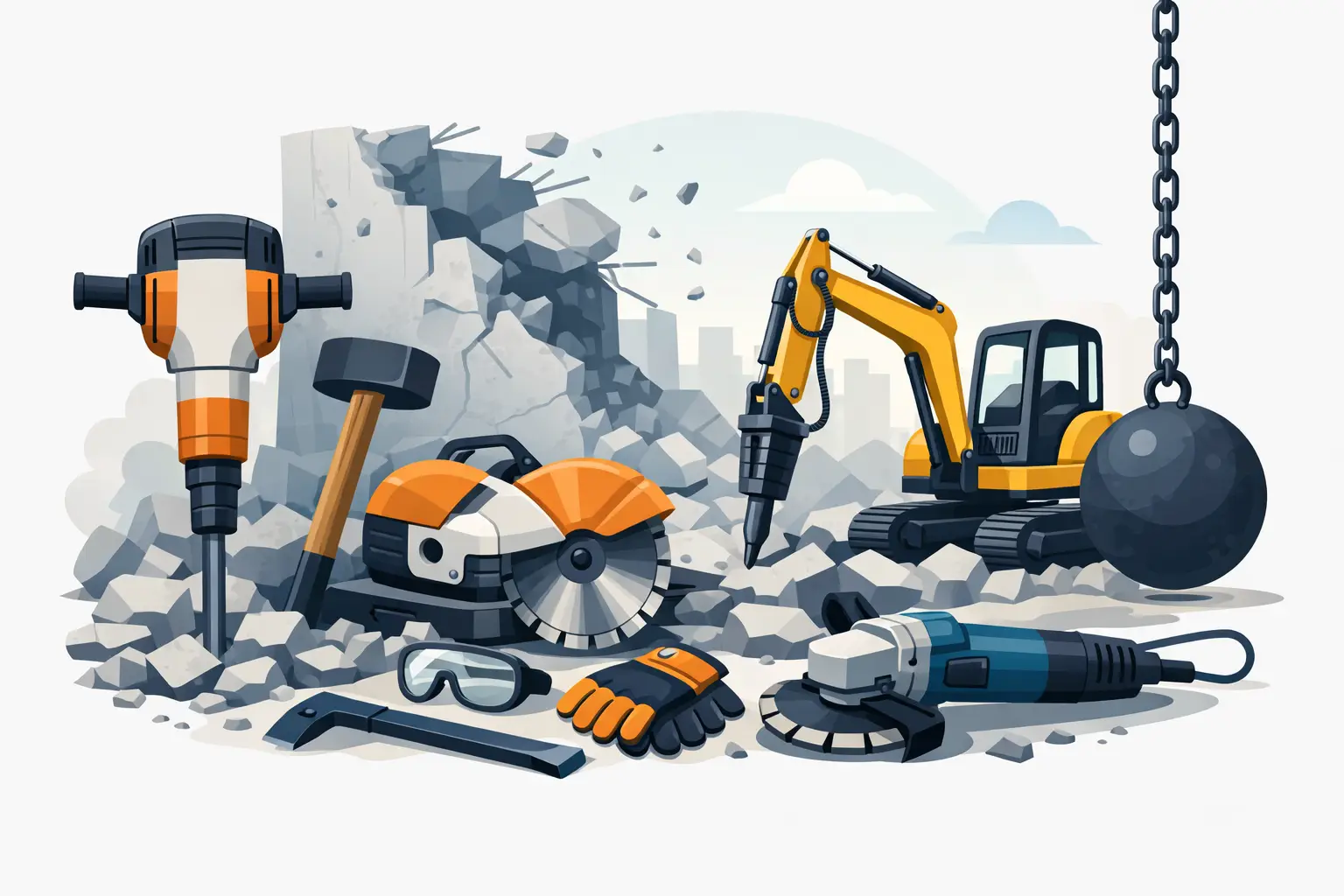
Concrete removal usually goes one of two ways. You either pick the right machine and get through the slab, footing or path without much drama, or you lose half a day fighting the wrong bit of gear. The best tools for concrete removal depend on what you are breaking, how thick it is, where it sits, and how clean the finish needs to be once the concrete is gone.
That is the part plenty of people underestimate. A 100 mm garden path, a reinforced driveway, a machine pad and a tiled bathroom screed are all concrete jobs, but they do not come out with the same setup. If you want to finish the job faster, reduce blowout around the edges and avoid hiring too much machine for a small area, you need to match the tool to the task.
Best tools for concrete removal by job type
For small, isolated break-out work, a demolition hammer is often the quickest option. It is easier to handle than a full jackhammer, suits tighter spaces, and works well for removing small pads, step sections, shower bases and stubborn patches around plumbing or electrical penetrations. If you are working indoors or in a backyard with limited access, this is often the smart starting point.
Once the slab gets thicker or the area opens up, a jackhammer makes more sense. This is the go-to for footpaths, driveways, patios and general slab demolition where you need impact force rather than finesse. A heavier unit will break concrete faster, but it is also harder on the operator and not ideal if you need to protect nearby surfaces. For a short section of hard reinforced concrete, the extra weight is worth it. For all-day work in a tighter area, it can become slow simply because fatigue sets in.
If you are dealing with large outdoor slabs, machine-mounted breakers are a different level again. An excavator or skid steer with a hydraulic breaker can knock out thick concrete far faster than handheld gear, especially where there is steel mesh or deep footings involved. The trade-off is access, transport and working room. On a residential site with fences, retaining walls and other finished surfaces close by, bigger is not always better.
Concrete saws also belong on this list, even though they do not remove concrete on their own. Cutting the slab first gives you clean edges, helps control cracking and makes the break-out more manageable. If you are removing part of a driveway, cutting around a repair section, or opening a trench line through concrete, a saw can save a lot of mess. It also reduces the chance of damage spreading into the section you need to keep.
Then there is the floor grinder. This is not a demolition tool in the same sense as a breaker, but it is one of the best tools for concrete removal when the job is about taking off surface build-up, trip hazards, old coatings, adhesives or uneven high spots. If the concrete itself is staying and only the top layer needs attention, a grinder is the right machine, not a jackhammer.
When to use a jackhammer, saw or grinder
A lot of concrete removal jobs slow down because the first tool chosen is the most aggressive one. That sounds efficient, but it often creates more clean-up and repair work than necessary.
Use a jackhammer or demolition hammer when the concrete needs to come out completely. That includes broken sections of path, old patios, small slabs, kerb sections and internal concrete that has to be removed back to soil or sub-base. The question is less about whether it will break concrete and more about how much control you need while doing it.
Use a concrete saw when the edges matter. If you are cutting out a square section for replacement, isolating a damaged area, or preventing random cracking from running into surrounding concrete, saw cutting first is the better move. It adds a step, but it usually saves time overall because the removal becomes cleaner and more predictable.
Use a floor grinder when the slab is staying in place and only the surface needs work. That includes levelling lips between pours, grinding out adhesive residue, removing coatings, or prepping concrete before a new finish goes down. It is also the tool for jobs where impact damage would create more problems than it solves.
There are also jobs where you need a combination. Cut the perimeter, break the slab, then grind the remaining edge or residue back. On commercial and renovation sites, that sequence is often the fastest path to a neat finish.
Best tools for concrete removal in tight access areas
Tight access changes everything. A tool that is perfect on an open site can be a headache once you are working through a side gate, inside a tenancy, or around finished landscaping.
For narrow or indoor access, smaller demolition hammers and compact electric breakers are usually more practical than heavy petrol-powered gear. They are easier to move, simpler to control and better suited to short bursts of removal around walls, posts and services. If you need to protect tiles, finished floors or neighbouring structures, control matters as much as power.
A compact concrete saw is also useful in these spaces because it lets you define the break line before impact starts. That can be the difference between a clean strip-out and a repair bill.
If dust is a concern, especially for interior work, pairing the right tool with dust control equipment is worth planning upfront. Concrete removal creates mess quickly, and clean-up time can chew through the job if it is not managed from the start.
The role of excavators and skid steers
Once the slab is out, someone still has to move it. That is where many concrete removal jobs stall. Breaking concrete is only half the work. Loading, shifting and cleaning up rubble can take just as long if the site setup is poor.
Excavators are ideal where you have enough room to break, lift and stockpile material. They work well on thicker slabs, footings and external demolition where a hydraulic breaker or bucket can keep the whole job moving. If you are removing old hardstand, crossover sections or substantial concrete around civil works, an excavator is often the fastest option.
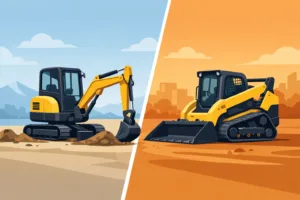
Skid steers and mini loaders come into their own for rubble handling, clean-up and tighter site movement. They save labour, speed up disposal and reduce the amount of hand loading required. On many jobs, the most efficient setup is not one big machine. It is a breaker for demolition and a compact loader to clear the waste as you go.
That is also where hiring makes sense. Most contractors and project crews do not need every specialist concrete removal machine sitting in the yard full-time. Hiring the right combination for the job keeps costs under control and avoids forcing one machine to do work it is not built for.
How to choose the right hire gear
Start with the concrete itself. Thickness, reinforcement, age and condition all matter. Fresh-looking residential concrete can still be heavily reinforced, while older paths may break up far more easily than expected.
Then look at access. If you cannot get the machine to the work area without extra handling, ramps or disassembly, your ideal option on paper may not be the best one on site. Tight access often shifts the decision towards smaller handheld gear, compact saws or mini loaders.
Think about what the finished area needs to look like. If you need neat edges for reinstatement, include a saw. If the slab stays but the surface changes, go straight to a grinder. If disposal is the slow part of the job, add a loader or tipper solution rather than throwing more labour at it.
Operator fatigue is another real factor. A heavy jackhammer may have more impact power, but that does not automatically mean faster production over a full day. Sometimes a slightly smaller unit with better manoeuvrability will keep the pace up better across the whole job.
If you are unsure, talk it through before you hire. A practical equipment recommendation based on slab thickness, site access and clean-up needs will usually save more time than guessing from a spec sheet. That is exactly how a local hire team like Small Hire helps crews get the right gear on site without overcomplicating it.
Common mistakes that slow concrete removal
The biggest mistake is going too small to save money, then burning labour hours trying to make underpowered equipment do heavy work. The second is going too large and losing time to access issues, overbreak or awkward handling.
Another common problem is skipping the saw cut. If the edge matters, uncontrolled cracking can leave a bigger repair than planned. The same goes for ignoring clean-up. Broken concrete piles up fast, and once it starts blocking access, productivity drops hard.
There is also the temptation to use a breaker for jobs that are really surface prep tasks. If the objective is to remove adhesive, level a lip or strip coatings, a grinder will usually give a cleaner result with less damage.
The right tool does not just break concrete. It helps you control the whole job – demolition, clean edges, clean-up and prep for whatever comes next. Pick for the site, not just the slab, and the work tends to move a lot faster.






Add comment