
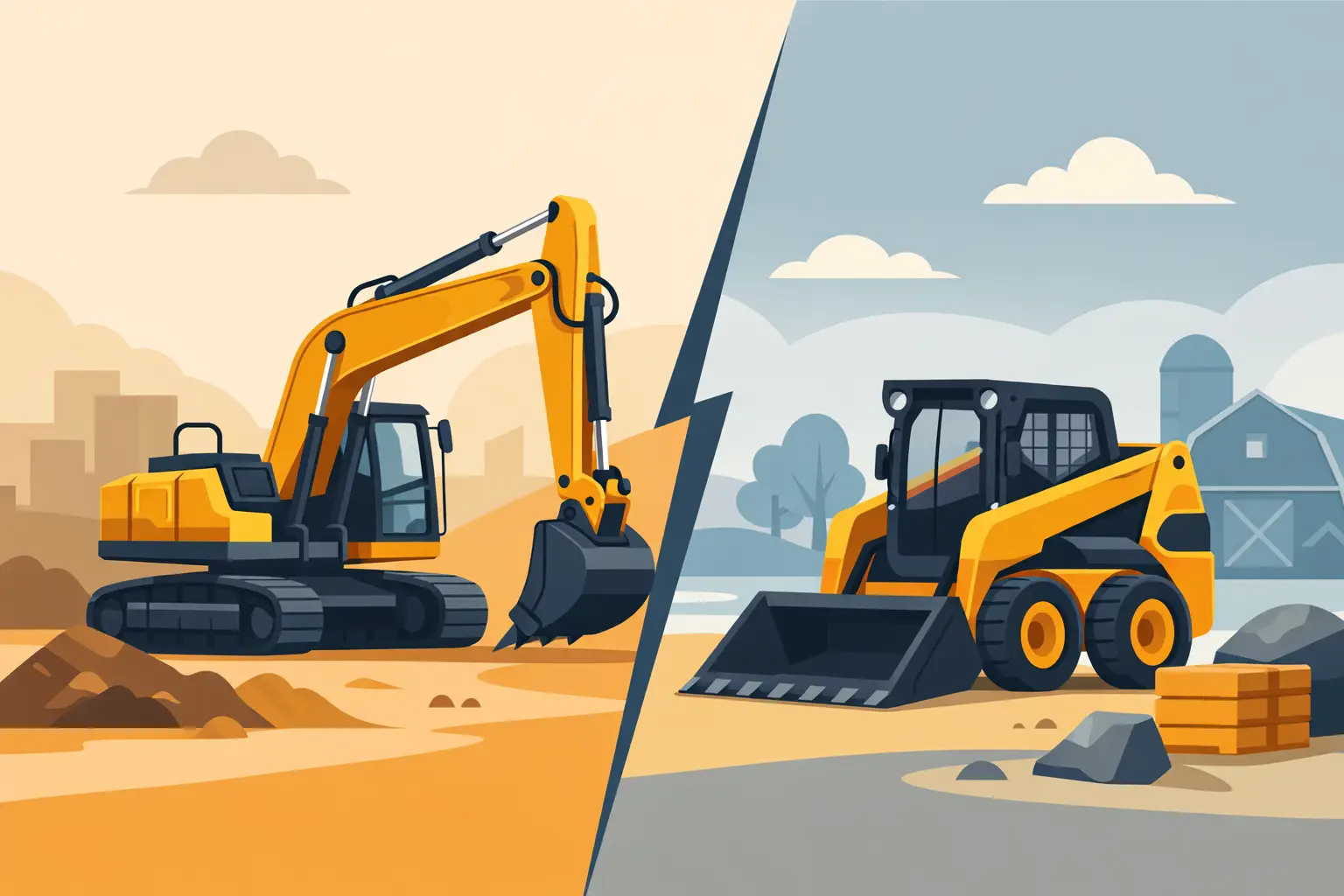
On a tight site, the wrong machine costs you twice – once in hire, and again in lost time. When it comes to excavator vs skid steer, the better choice depends less on size alone and more on what the job actually asks the machine to do.
Both are common on construction, landscaping and earthmoving work across the Gold Coast, and both can save serious labour when matched properly. But they do very different things well. If you’re trenching for stormwater, cleaning up spoil, shifting material, levelling out a yard or working around existing structures, the machine you hire needs to suit the task, access and finish standard.
Excavator vs skid steer: the core difference
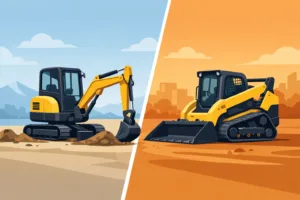
An excavator is built to dig. It uses a boom, dipper and bucket to excavate below ground level, load trucks, trench accurately and work in places where reach matters more than travel speed. Even compact excavators can rotate through 360 degrees, which makes them handy when space is limited but the digging still needs to be precise.
A skid steer is built to carry, push and load. It works off the front with lift arms and a bucket or attachment, and it moves quickly around site. Where an excavator tends to stay planted while it digs, a skid steer is constantly repositioning, scooping, backfilling, spreading and cleaning up.
That simple difference is usually where the decision starts. If the job is mostly below ground, an excavator usually makes more sense. If the job is mostly material movement at ground level, a skid steer is often the faster option.
When an excavator is the better hire
If you need to dig trenches, footings, post holes, drainage lines or service runs, an excavator is the right tool more often than not. It gives you proper digging depth, cleaner trench lines and better reach over obstacles. You can sit beside the trench line rather than driving directly over the work area, which is a big advantage in soft ground or built-up sites.
Excavators also suit jobs where accuracy matters. Landscaping crews cutting around retaining walls, plumbers opening service trenches, and builders preparing for foundations all benefit from the control an excavator gives you. On residential work, that control can mean less handwork afterwards and less risk of chewing up areas that need to stay tidy.
They also handle uneven ground well. Tracks give good stability, and because the machine can slew, you can dig and place spoil without constantly turning the whole unit around. On tight access jobs, that makes a real difference to productivity.
The trade-off is speed in cleanup and material handling. An excavator can move spoil, but if you’ve got a big pile to relocate across site or need to spread and level material quickly, it’s not always the fastest machine for the second half of the job.
When a skid steer is the better hire
A skid steer earns its keep when the job is about shifting material efficiently. Loading soil, gravel, mulch, rubble or sand, backfilling trenches, cleaning up demolition waste, and trimming site levels are classic skid steer work. If you’ve got stockpiles to move and a decent amount of open area, it can get through the job quickly.
They’re also handy for sites where one machine needs to do several surface-level tasks in a short window. A contractor might use a skid steer to scrape, load, spread and final trim in the one hire period. That flexibility is one reason they stay busy on landscaping, civil prep and general construction work.
Another advantage is cycle time. A skid steer can scoop, drive, dump and return faster than an excavator on repetitive loading work. If your job includes truck loading, site cleanup or moving bulk material from one end of the block to the other, that speed adds up.
The downside is digging performance. You can scrape and shallow-cut with a skid steer, but proper excavation is not its strong point. If you’re trying to dig a service trench or footing with one, you often end up spending more time than you saved by hiring the cheaper or more familiar option.
Access, ground conditions and site layout
A lot of machine decisions are really site decisions. Access width, turning room, overhead obstacles and finished surfaces matter just as much as the job description.
Excavators are often better in narrow spaces because they can sit in one position and work around themselves. If you’re between a fence and a wall, beside an existing slab, or working close to structures, the ability to slew without driving all over the place is useful. A compact excavator can often do the job with less site disturbance.
A skid steer needs room to manoeuvre. It shines where there is enough space to turn, travel and build momentum through the work cycle. On a cramped site, all that turning can become awkward, especially if you’re trying to avoid damaging edges, turf or finished surfaces.
Ground pressure also matters. Tracked machines generally spread weight better than wheeled ones, although the exact impact depends on the model and surface. Wet ground, fresh landscaping and soft subgrade can all influence whether one machine will leave a cleaner site than the other.
Attachments can change the answer
This is where it gets less black and white. The base machine matters, but attachments can swing the decision.
An excavator with the right bucket setup can trench, batter, clean drains and handle light demolition. Add an auger and it becomes useful for fence posts, planting and footings. For many trade jobs, that means one compact machine can cover more than people expect.
A skid steer can also become far more versatile with attachments. Depending on the job, it may handle trenching, sweeping, soil preparation or material spreading far better than a standard bucket-only setup. That said, attachments improve versatility, not magic. A skid steer with a specialist attachment still won’t replace the reach and below-ground digging performance of an excavator on true excavation work.
If the job has two stages – say trenching first, then backfilling and site cleanup – it can be worth asking whether one machine can do both adequately or whether hiring the right machine for each stage will finish the job faster overall.
Cost is not just the hire rate
Plenty of customers compare day rates first, which is fair enough, but the cheaper machine on paper is not always the cheaper machine on site. Excavator vs skid steer often comes down to production.
If an excavator can trench a job in half the time and with less labour on the shovel, it may be the better value even if the rate is higher. If a skid steer can move and spread material three times faster than an excavator, the same logic applies.
Fuel use, transport, operator confidence and attachment needs all affect total cost too. So does rework. Hiring the wrong machine can leave you with rough trench lines, extra manual cleanup or a site finish that still needs another pass.
For short jobs, flexible hire periods matter. If the machine suits the task and you can knock the work over in a few hours, that is where good planning saves money. It is often worth having a quick chat before booking rather than guessing and losing half a day.
Which machine suits common jobs?
For trenching, drainage, footings, stump removal and detailed digging, go excavator. For loading spoil, moving aggregate, backfilling, site cleanup and levelling, go skid steer.
For landscaping jobs, it depends on the stage. Early excavation and shaping usually lean toward an excavator. Material distribution, turf prep and cleanup often lean toward a skid steer. On some jobs, both make sense, especially when time is tight and there is enough work to justify using each machine for what it does best.
For residential projects with tight access and a need to keep damage down, compact excavators often have the edge. For open commercial or civil areas with plenty of movement and repetitive loading, a skid steer can be the more efficient hire.
The best choice comes down to the bottleneck
A practical way to decide is to ask what is most likely to slow the job down. If the bottleneck is digging depth, reach or trench accuracy, hire the excavator. If the bottleneck is moving material, loading, backfilling or cleaning up quickly, hire the skid steer.
That is usually the clearest way to cut through the debate. Choose the machine that removes the hardest part of the job, not just the one that can sort of do most of it.
If you’re still weighing up excavator vs skid steer, the smartest move is to match the machine to the ground, the access and the task sequence before the job starts. A quick conversation with experienced hire staff at Small Hire can save a lot of mucking around on site and help you finish the job faster.






Add comment