
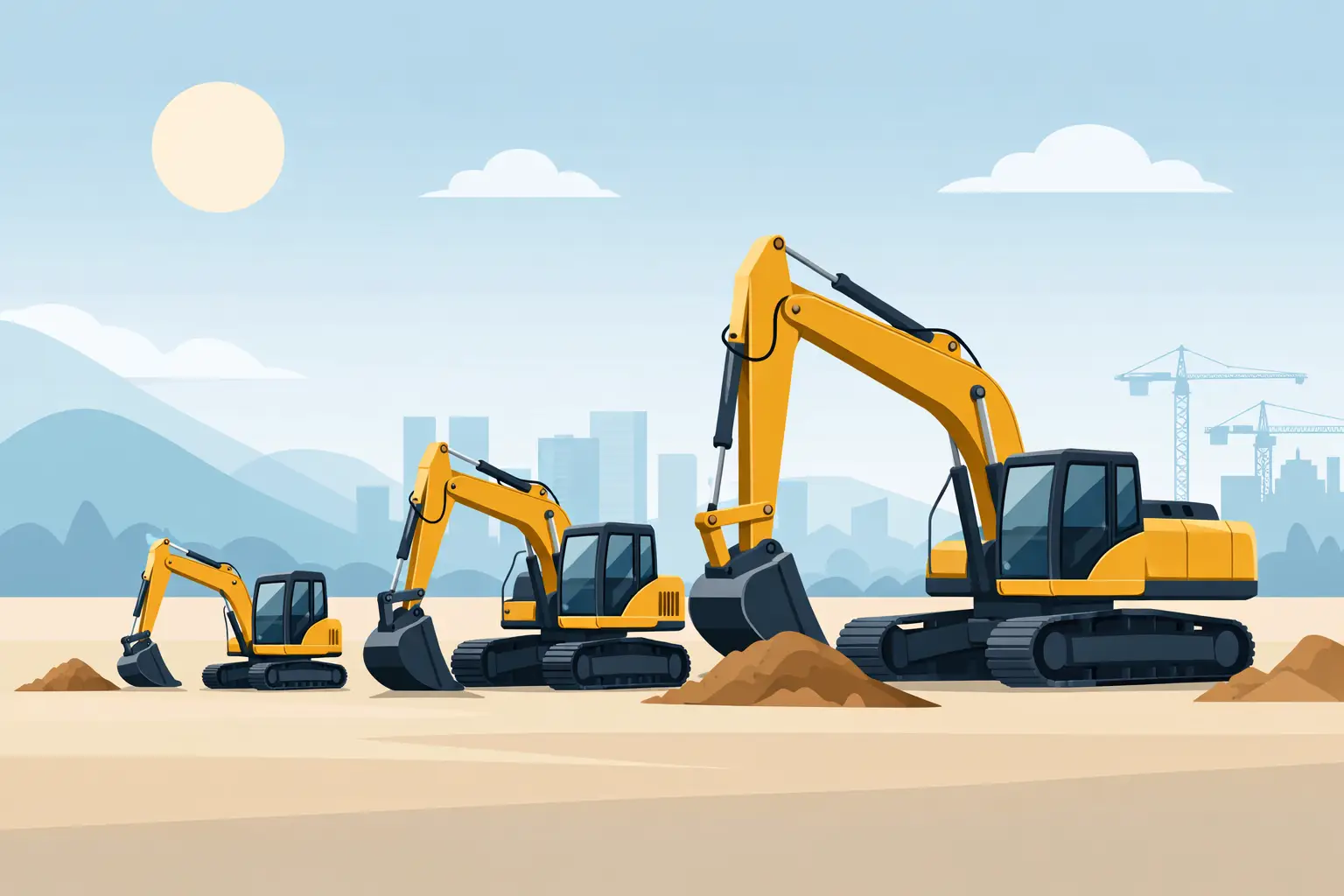
If you are asking what size excavator do I need, the real question is usually this: what will get the job done without wasting time, money, or access on site? Go too small and you spend all day chasing production. Go too big and you can run into access issues, turf damage, transport headaches, and a machine that is overkill for the work.
The right excavator size depends on four things more than anything else – access, digging depth, material volume, and what attachments or lifting work are involved. Once those are clear, the choice gets a lot easier.
What size excavator do I need for my job?
For most residential and light commercial work, the answer sits somewhere between a 1.7 tonne mini excavator and a 5 tonne machine. That covers a big chunk of drainage, trenching, landscaping, site clean-up, footing prep, small demolition, and general earthworks.
Smaller machines are ideal when access is tight and the job is close to houses, fences, pools, retaining walls, or finished surfaces. Larger machines make more sense when you need extra reach, deeper digging, more breakout force, or faster spoil movement. There is no perfect size for every site. The best choice is the one that suits the tightest constraint on the job, not the biggest task on the quote.
Start with site access
Before you think about bucket size or digging power, measure the narrowest point the machine has to pass through. Side gates, fence openings, carports, garage clearances, and tight set-backs decide a lot of hires before the machine even arrives.
If you only have narrow side access, a compact mini excavator is usually the safe call. That is common on Gold Coast residential jobs where you are working behind existing homes or around established landscaping. A bigger machine might save time once it is in position, but that does not help if it cannot get to the work area.
Access is not just width either. Think about height, turning room, and where spoil is going. On a cramped site, a zero tail swing or short tail swing machine can make a big difference. It gives the operator more room to work without clipping fences, walls, or posts.
Match machine size to digging depth and reach
A trench for electrical conduit is not the same as a sewer run, and both are different again from stump removal or footings. The deeper the job, the more careful you need to be about machine size.
A smaller excavator can handle shallow trenching and light general digging well, especially where speed is less important than access. But once trenches get deeper or you need to load out over the side into a truck or trailer, machine size starts to matter more. Extra reach saves repositioning. Extra weight and hydraulic power help when ground conditions are tougher than expected.
If the job involves repeated deep trenching, battering, benching, or pulling spoil back from a longer reach, stepping up a size can be the difference between finishing on schedule and dragging the work out.
Soil conditions change the answer
On paper, a small excavator might look fine for the depth and width you need. On site, hard clay, compacted fill, roots, buried rubble, or wet ground can change that quickly.
Loose sandy material is one thing. Tight, dry ground that has not been touched in years is another. If you are breaking through compacted material, removing stumps, or dealing with heavy clay, a larger machine gives you more breakout force and stability. That usually means cleaner digging, less strain on the operator, and fewer wasted hours.
Ground pressure matters too. Heavier machines can mark up finished lawns, soft verges, or wet ground more easily. So there is always a trade-off. If site protection is critical, you may need a smaller machine and a bit more time rather than brute force.
Think about how much material you are moving
A common mistake is sizing the machine only around the trench or hole, not the amount of spoil that needs shifting. If you are doing a quick repair, a mini excavator is often spot on. If you are stripping areas, digging multiple trenches, or loading out large volumes, production matters.
Larger excavators carry more in the bucket, cycle faster under load, and generally keep up better on busier sites. On the other hand, if you are working in a backyard where the material only needs to be stockpiled nearby, going too large may not save much at all.
The question is not just how much you need to dig. It is how far you need to move it, how fast the site needs to turn over, and whether the machine is feeding another part of the job.
Attachments and lifting work matter
Buckets are only part of the story. If you need an auger, hammer, ripper, or grab, make sure the excavator is sized to run that attachment properly. A machine that is technically compatible is not always the most efficient option.
Lifting is another area where people can undersize by mistake. If you are shifting pits, pipes, sleepers, small concrete sections, or landscape materials, stability becomes a bigger factor. A compact machine may lift the load on flat ground close in, but struggle once the reach changes or the machine is off-level.
If the job includes any regular lifting, it is worth speaking with experienced hire staff before locking in a size. Rated capacity, site conditions, and lift radius all matter.
A practical guide to common excavator sizes
Machines around 1 to 2 tonnes suit very tight access, light trenching, garden work, irrigation, footings for small structures, and tidy-up jobs where minimal damage is a priority. They are easy to work into residential sites and often the quickest answer when the alternative is hand digging.
Machines in the 2.5 to 3.5 tonne range are a strong all-round option. They give you more dig depth, more reach, and more hydraulic performance without becoming too bulky for many residential and light commercial sites. For a lot of plumbers, landscapers, and builders, this is the sweet spot.
Machines around 4 to 5 tonnes start to make more sense when the job is less about access and more about output. They are well suited to heavier trenching, tougher ground, footings, site cuts, and bulkier material handling. You get more muscle and better productivity, but you need to be realistic about transport, space, and ground impact.
What size excavator do I need for residential work?
Most residential projects lean towards the smaller end of the range, but there is still plenty of variation. If you are trenching for drainage beside a house, working in a backyard, or navigating through a side gate, a mini excavator is usually the right place to start.
If the site is open, access is straightforward, and you are doing larger landscaping, pool prep, retaining wall excavation, or multiple service trenches, moving up to a mid-size machine often pays off. It can shorten the job enough to outweigh the slightly higher hire cost.
That is the part people sometimes miss. The cheapest machine on the day rate is not always the cheapest machine for the job. If a larger excavator cuts half a day off labour, truck waiting time, or reinstatement, it may be the better value option.
Don’t forget transport and operator confidence
Machine size affects more than the digging. It affects how the excavator gets to site, what trailer or truck is needed, and how comfortable the operator is using it productively.
A capable operator can do impressive work with a compact machine, but there are limits. If the person on the controls is not used to running larger gear in tight areas, choosing a slightly smaller machine can actually improve site efficiency and reduce the chance of damage.
Transport also matters for short hires. On a quick turnaround job, easy delivery and collection can be part of the decision. That is especially true when timing is tight and you want the machine on site, working, and off again without fuss.
A simple way to choose the right size
If you are still weighing it up, work through the site in this order: narrowest access point, required dig depth, soil type, volume of spoil, and any attachment or lifting needs. That order usually points you in the right direction fast.
If access is very tight, the decision is mostly made for you. If access is open, then productivity becomes the bigger factor. And if the ground is tough or the work involves deeper trenches and heavier handling, stepping up in size is usually the safer play.
For most customers, the best result comes from matching the excavator to the actual bottleneck on site, not the ideal conditions in the quote. If you are unsure, it is worth talking it through with a hire team that knows the gear and sees these jobs every day. A five-minute conversation can save you a half-day headache and get the right machine on site the first time.



Add comment