
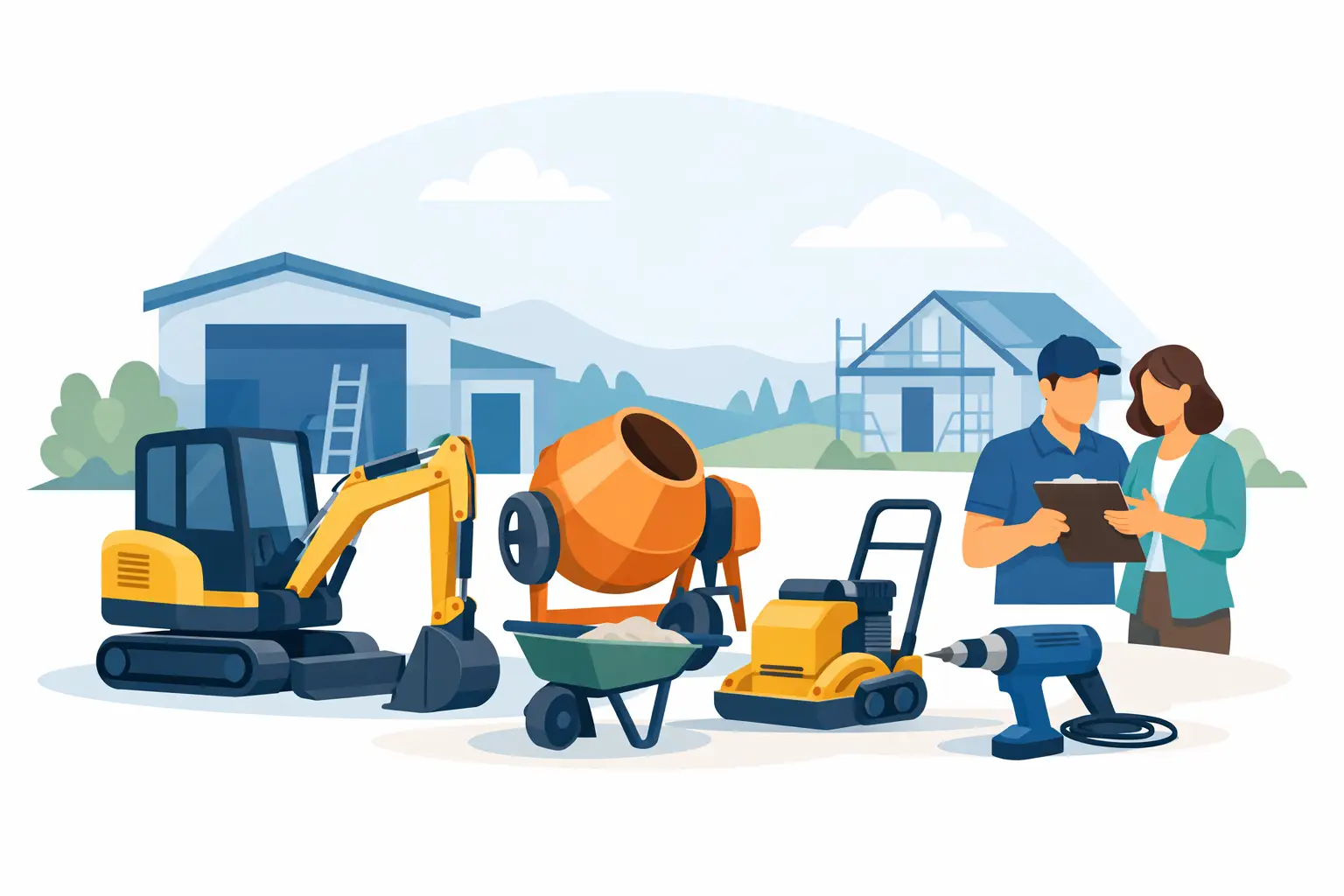
A half-day trench, a weekend concrete grind, a quick site clean-up before handover – small jobs can chew through time and money faster than big ones if you turn up with the wrong gear. That is where equipment hire for small projects makes sense. Instead of making do with whatever is already on the ute or spending big on machinery that sits idle after one job, you can get the right machine for the task and keep the work moving.
For tradies, owner-operators and serious DIY customers, small project hire is not really about hiring small machines. It is about matching equipment to a tight scope, a short timeline and a clear budget. Sometimes that means a compact excavator for a day. Sometimes it is a concrete saw for four hours, a trailer for the weekend, or a pressure washer to finish a maintenance run properly.
Why equipment hire for small projects makes commercial sense
Buying equipment only stacks up when the machine earns its keep often enough to cover purchase price, servicing, storage, transport and downtime. For plenty of short-run jobs, that maths does not work. A one-off retaining wall, a quick floor prep job or a drainage repair may need specialist gear, but not often enough to justify ownership.
Hiring keeps capital free for wages, materials and the jobs already booked in. It also cuts the hidden costs that often get ignored until they become a problem. Tyres wear out. Hydraulic hoses fail. Engines need servicing. Trailers need registration. Even a reliable machine becomes expensive when it spends most of its life parked.
There is also the speed factor. Small projects are usually scheduled tightly. If you can hire a machine that is job-ready and suited to the task, you finish faster and move onto the next job sooner. That matters whether you are billing by the project or trying to keep a crew productive across several sites in one week.
The biggest mistake on small jobs
The common trap is underestimating the job because it looks straightforward. A narrow trench becomes hard digging in compacted ground. A patch repair turns into a full slab cut and removal. A tidy-up washdown needs more pressure and flow than a domestic unit can deliver. The result is usually the same – wasted labour, delays and another trip to sort out equipment halfway through the day.
Small jobs leave less room for error because the margins are tighter. If a two-day project loses half a day to the wrong machine, that is a major hit. Good equipment hire is less about getting the cheapest rate and more about avoiding the expensive slowdown.
What to hire for common small project work
The right hire depends on access, material, duration and finish standard. That sounds obvious, but it is where jobs are won or lost.
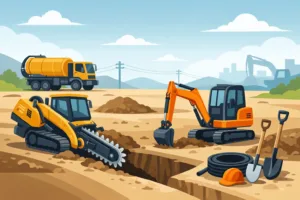
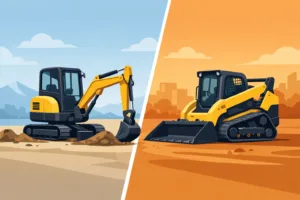
For earthmoving and landscaping, compact machines are usually the sweet spot. Mini excavators, mini loaders, skid steers and posi tracks handle trenching, site cuts, spoil removal and material movement without needing the footprint of larger gear. On tighter residential blocks around the Gold Coast, access width can matter just as much as bucket size.
For concreting and demolition, the tool choice is more specialised. Concrete grinders, floor prep gear, coring equipment and saws can save hours compared with general-purpose tools. If the job calls for a clean finish or accurate cuts, it is worth hiring equipment built for that exact task rather than trying to improvise.
For cleaning and maintenance, pressure washers, pumps, generators, ladders and scaffolding often make the difference between a quick finish and a frustrating day. These are the jobs where short hire periods can really pay off. If the task only takes a few hours, a flexible rate can be better value than a full-day charge.
Transport gear matters too. Trailers and tipper trucks are often treated as an afterthought, but on small jobs they can be the piece that keeps the whole job moving. If you cannot shift spoil, rubble or equipment efficiently, the rest of the work slows down around it.
Short hire periods matter more than people think
One reason equipment hire for small projects works so well is flexibility. Not every job needs a full week, or even a full day. A four-hour hire can be enough to core a few holes, load out a pile of spoil or complete a short burst of grinding. Weekend hire can also suit customers trying to knock over work outside standard site hours or fit a project between other bookings.
This is where value is not just about price. It is about paying for the time you actually need. If your hire options are too rigid, you either rush the work or overpay for idle time. Neither helps the job.
How to choose the right equipment the first time
The best starting point is not the machine itself. It is the job conditions. Think about access width, ground conditions, lift requirements, power supply, material type and where waste is going. A compact machine with the right attachment may outperform a larger one simply because it gets into the work area without extra labour or set-up.
Duration matters as well. If the task is repetitive and time-sensitive, a more capable machine can be cheaper overall even if the hire rate is higher. If the work is light and intermittent, there is no point paying for capacity you will not use.
Operator experience is another real factor. Some gear is straightforward. Some is not. Hiring the wrong machine for the operator can slow the job or create unnecessary risk. That is why speaking with someone who knows the fleet and understands site conditions is often more useful than comparing specs on a screen.
Cheap hire can cost more
On paper, a lower daily rate looks attractive. On site, it means very little if the machine is unreliable, poorly maintained or not suited to the task. Delays on active jobs are expensive. You lose crew time, throw out sequencing and can end up paying for extra deliveries, extra disposal runs or additional labour just to recover the schedule.
Reliable, well-maintained equipment usually gives better value than the bargain option. Premium brands tend to perform better under load, and that matters when you are trying to get in, get the work done and get out without headaches. For many trade customers, the real saving is not found in shaving a few dollars off the hire rate. It is found in finishing on time.
Local hire makes a difference on active jobs
For small project work, convenience matters. A local hire provider with a broad range means less running around and a better chance of getting what you need quickly. That is especially useful when the scope changes mid-job and you need a different attachment, another trailer or a more suitable machine without losing the whole day.
It also helps to deal with people who understand the local type of work – residential access issues, landscaping jobs, slab prep, drainage, maintenance runs and fast-turnaround trade work. Small Hire works with exactly that kind of customer, so the conversation tends to stay practical. What is the job, what is the access, how long do you need it, and what will get it done fastest?
When hiring is better than owning
If you use a machine every day, ownership may still make sense. But a lot of equipment used on small projects falls into the occasional-use category. Specialist floor prep gear, coring equipment, pumps, generators, scaffolding and certain earthmoving machines are often better hired as needed.
That approach keeps your business lean. You are not tying up cash in equipment that sits in the yard, and you are not carrying maintenance costs for gear that only comes out every few months. It also gives you access to a wider range of equipment than most small operators would reasonably own themselves.
There is a practical benefit here too. Hiring lets you scale up or down based on the job book. Busy week ahead with multiple sites? Bring in extra capacity. Quiet patch or smaller scope? Hire only what you need. That kind of flexibility is hard to get from owned equipment alone.
The best hire is the one that saves a second trip
Most customers do not need a long lesson on machinery. They need the right gear, at the right time, for a fair price, with no fuss. That is really what good small project hire comes down to. If the machine is ready, the advice is sound and the hire terms fit the job, the whole project runs better.
Small jobs still need proper equipment. In many cases, they need it more, because there is less time to recover from a poor choice. Get the hire right, and the work feels straightforward. Get it wrong, and a simple job turns into a long day. If you are lining up your next short-run project, start with the equipment that will finish it faster, not the gear you hope might do the job.




Add comment