
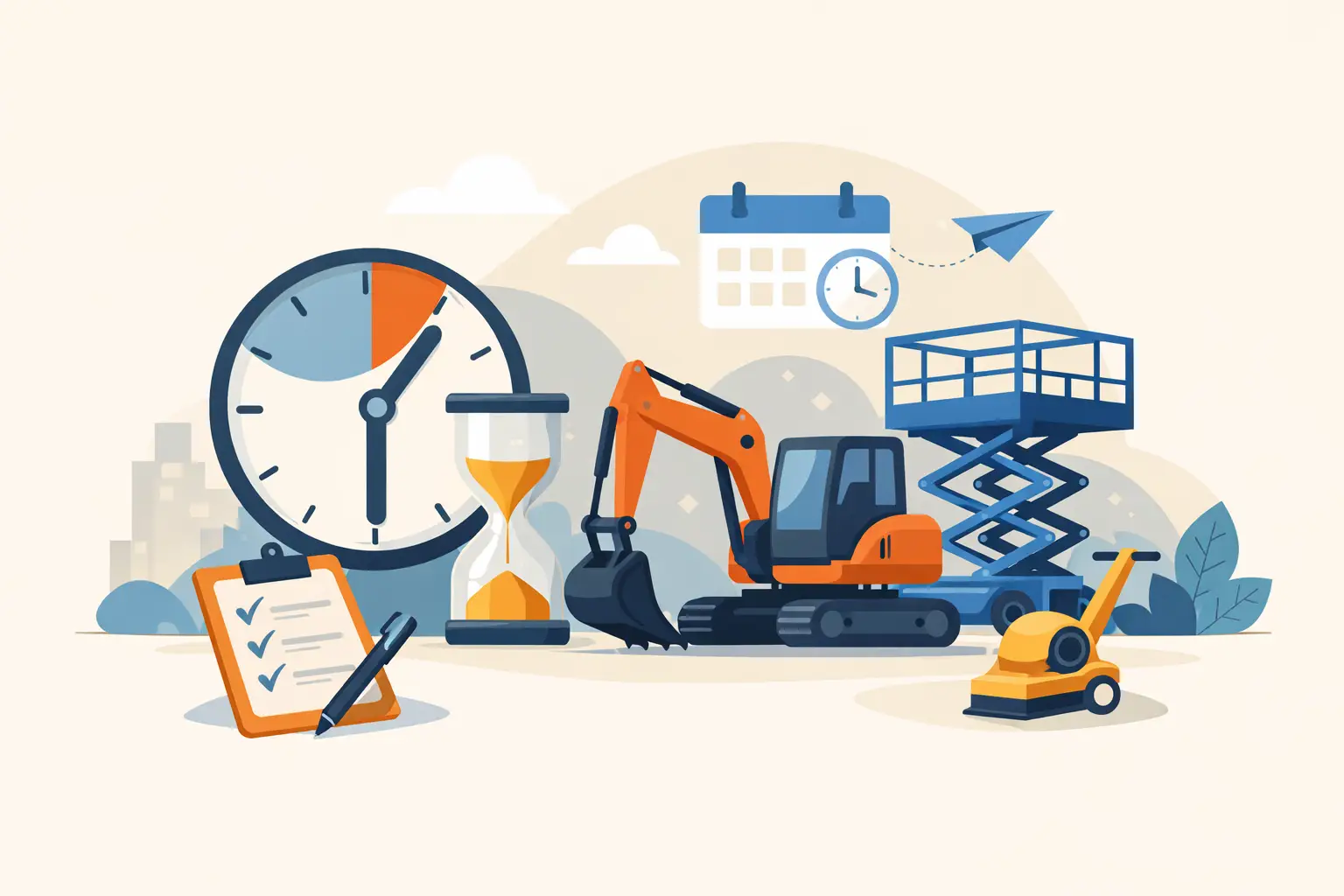
Half a day can be the difference between staying on schedule and losing the rest of the week. That is where 4 hour equipment hire makes sense. If the job is tight, access is limited, or you only need a machine for one specific task, paying for a full day is not always the smart move.
For plenty of trade jobs, the real machine time is shorter than the paperwork around it. A landscaper might only need a mini loader long enough to shift spoil and level a section. A concreter may need a core drill for a few penetrations, not a full-day booking. A maintenance crew might only need a pressure washer or pump to sort one issue and move on. Short-term hire works best when the task is clear, the site is ready, and there is no room to waste time.
When 4 hour equipment hire is the better option
A short hire period suits jobs with a defined start and finish. That usually means one machine, one task, one crew, and no waiting around for another trade. If you are cleaning up after excavation, grinding a small slab, trenching a short run, or lifting gear into place, four hours can be enough to get in, get it done and get off site.
It also helps when you are quoting work. A lot of contractors do not want to load a full-day machine cost into a job that only needs a couple of productive hours. A 4 hour rate gives you more room to price competitively without taking a hit on margin.
That said, short hire is not automatically cheaper in practice. It depends on travel time, site access, operator experience, and whether the machine is ready to work the moment it arrives. If the site still needs clearing, materials are late, or the crew is waiting on approvals, a four-hour window can disappear quickly.
What jobs suit a 4 hour hire period?
The best fit is work that is task-based rather than open-ended. Floor prep is a good example. If you know the square metreage, the surface condition and the finish required, hiring a concrete grinder or floor preparation gear for four hours can be plenty. The same goes for core drilling a set number of holes, pressure cleaning a defined area, pumping out water, or using a compactor on a smaller patch.
Earthmoving gear can also suit short hires, but only if the scope is under control. A mini excavator, skid steer or posi track can do a lot in four hours when the operator knows the job and the site is accessible. If there is poor access, tight turns, hidden services or a lot of material handling, you may be better off allowing more time.
For serious DIY customers, 4 hour equipment hire is often a practical way to tackle a specialised task without buying gear that will spend most of its life in the shed. But the same rule applies – have your materials on site, know what you are doing, and book the right machine from the start.
The real value is in matching the machine to the task
Most short hires go wrong for one reason: the wrong equipment gets booked. Not because the machine is bad, but because it is not suited to the job. Hiring a larger machine than you need can create access problems and wasted cost. Going too small can mean you run out of time before the job is finished.
That is why the details matter. Ground conditions, width restrictions, spoil type, slab hardness, power availability, trailer capacity and transport all affect what will work in a four-hour window. A quick chat before booking often saves far more time than trying to make the wrong machine work on site.
An experienced hire team will usually ask a few simple questions: what needs doing, how much of it, what access is like, and whether you are collecting or need delivery. Those answers are what make short hires practical rather than rushed.
How to get the most from 4 hour equipment hire
Short-term hire only pays off when your site is ready before the equipment arrives or leaves the yard. That means access is clear, the work area is marked out, and any required permits or service locations are sorted. If the machine turns up and the crew is still moving materials or waiting on another trade, you are burning through paid time.
It also helps to think in sequence. If you are using a mini loader to move material, have somewhere for that material to go. If you are hiring a grinder, make sure power and dust management are sorted. If you are pumping out water, know where discharge is going. Four hours is enough for productive work, but not enough for site indecision.
Transport matters too. Some customers prefer to collect gear and keep control of timing. Others are better off using delivery so the machine lands where it is needed, ready to work. There is no one right answer. If your crew is flat out or the job is live, delivery can save more time than it costs.
4 hour equipment hire vs full-day hire
A four-hour booking is ideal when the task is tight, straightforward and well planned. A full day is usually the safer option when there are unknowns. That includes difficult digging conditions, older concrete, weather delays, shared site access, or jobs where the scope tends to grow once you get started.
There is also the question of pressure. Some operators work better with a short window because it keeps the day moving. Others rush, make mistakes, or end up needing extra time anyway. If the cost difference between a short hire and a full day is small compared with the value of finishing properly, the full day may be the better call.
For trade customers running multiple stops in a day, though, short hire can be a strong fit. You can line up one machine for a targeted task, return it, and keep the rest of the schedule moving. That is especially useful for maintenance crews, flooring specialists and subcontractors who do not need to tie up gear longer than necessary.
What equipment is commonly hired for four hours?
Short hires are common across tools, small plant and specialised gear. Concrete grinders, coring equipment, pressure washers, pumps, generators, compactors, ladders, scaffolding and trailers all make sense for short-duration work when the task is defined.
Small earthmoving equipment can also fit the model well, including excavators, mini loaders, skid steers and posi tracks. The key is not whether the machine is big or small. It is whether the task can realistically be completed in the time allowed.
On the Gold Coast, that often comes down to practical site conditions. Residential access, soft ground after rain, tight side entries and traffic around busy areas can all affect how much gets done in a short hire period. The machine may be capable of more than the site allows.
Why local support matters on short hires
With a full-day or multi-day booking, a slow start can sometimes be absorbed. With a short hire, timing matters more. You want equipment that is job-ready, easy to collect or deliver, and backed by people who know the fleet.
That is where a local operator with a broad range and practical advice is worth dealing with. If one machine is not the right fit, there should be another option. If the task changes, you need straight answers quickly. Small Hire works with plenty of customers in exactly that situation – short window, clear task, no time for mucking around.
The best outcome is simple. You book the right equipment, use it for the job it was meant to do, and hand it back having moved the work forward. No oversized hire cost, no unnecessary delays, and no machine sitting idle while the clock runs.
If you are considering 4 hour equipment hire, be honest about the task, the site and the time you actually have. Done properly, it is one of the easiest ways to keep a job lean, fast and on track.







Add comment