
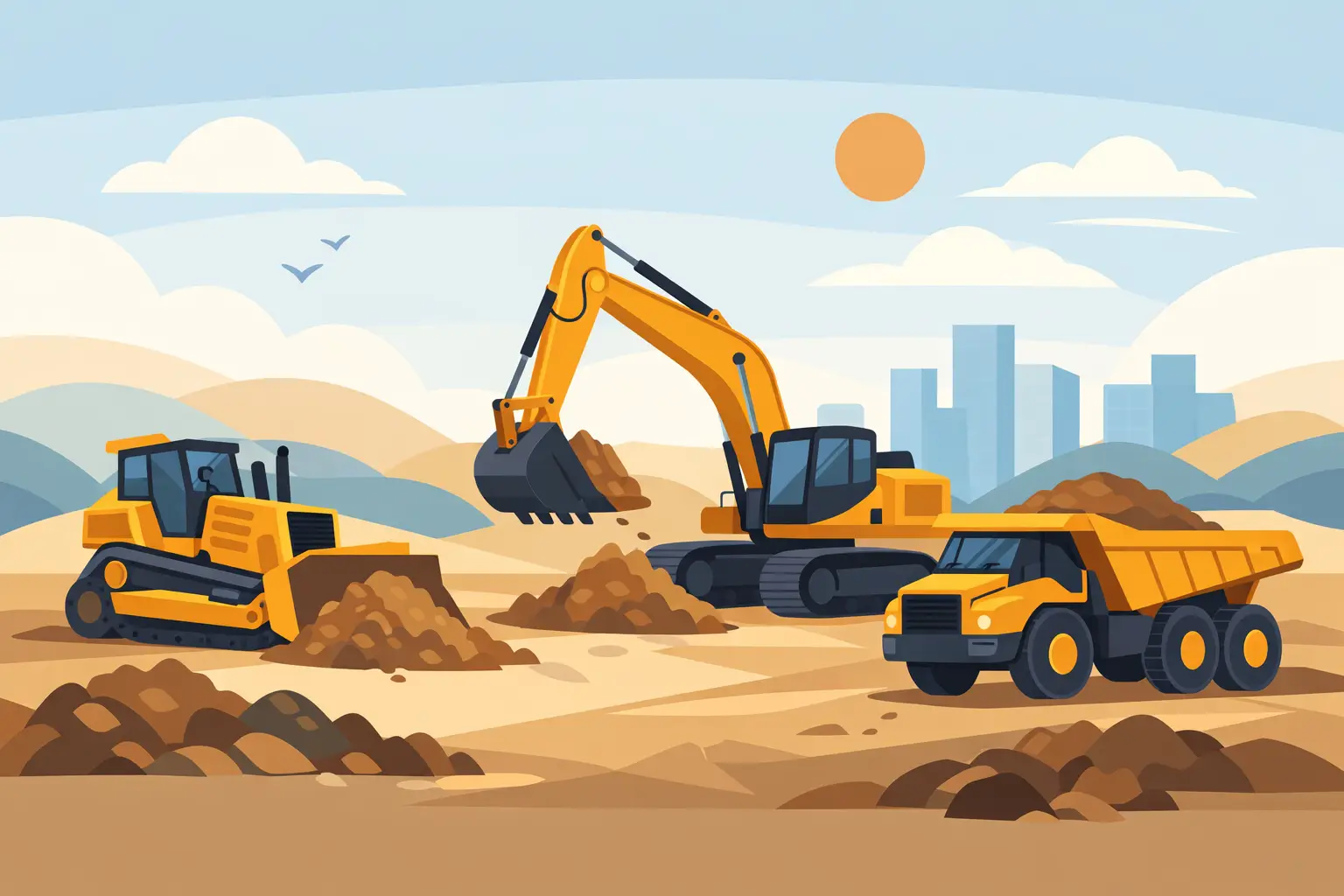
A job can go sideways fast when the wrong machine turns up. Too small, and you’re wasting hours. Too big, and you are fighting access, ground pressure, transport and cost before the work even starts. If you are asking what is earthmoving equipment, the short answer is this: it is the range of machines used to dig, move, spread, load, level and remove soil, rock, rubble and other material on site.
That definition is simple enough, but on a real job the category is broader than many people think. Earthmoving equipment covers compact machines for tight residential sites, heavier units for civil and commercial work, and attachments that change what a base machine can do. The right setup depends on the material, access, finish required and how quickly the job needs to be done.
What is earthmoving equipment used for?
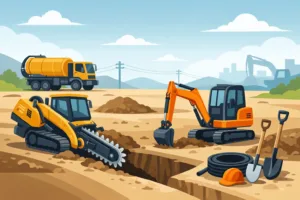
Earthmoving equipment is used anywhere ground needs to be changed. That might mean excavating footings, cutting trenches for plumbing or electrical, levelling a house pad, clearing a block, shifting spoil, preparing a landscape, backfilling after services, or loading material into a truck.
On the Gold Coast and across South East Queensland, that often means dealing with sand, clay, wet ground, built-up residential sites and jobs where access is tight. A machine that works well on an open civil site may be the wrong choice in a backyard with narrow side access or limited turning room. That is why earthmoving is not just about power. It is also about size, reach, traction and control.
The main types of earthmoving equipment
When people talk about earthmoving gear, they are usually referring to a few core machine types.
Excavators
Excavators are one of the most common machines in the category. They dig below ground level, swing material to the side, load trucks, break up hard ground with the right attachment and handle trenching work with good accuracy. Compact excavators are popular for plumbing, drainage, landscaping and domestic construction because they can get into tighter spaces without giving away too much capability.
The main advantage of an excavator is digging precision. The trade-off is that it is not the fastest machine for carrying material across a site. If the job involves lots of loading and short-distance shifting, you may pair it with another machine.
Skid steers and posi tracks
Skid steers and posi tracks are built for moving material around site, loading, spreading and site clean-up. With a bucket fitted, they are quick and versatile. Change the attachment and they can handle trenching, levelling, sweeping or augering.
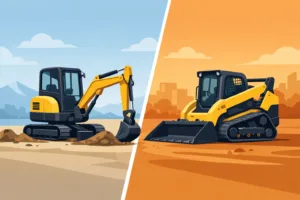
A skid steer on wheels can be a good fit on firm ground and hardstand areas. A posi track, with rubber tracks, usually gives better flotation and traction on softer ground. That matters after rain or on sites where rutting is a problem. The trade-off is that tracks can mark finished surfaces if the operator is careless, and machine weight still needs to be considered on sensitive ground.
Mini loaders
Mini loaders are a practical choice when access is the limiting factor. They are commonly used in landscaping, backyard works and smaller construction jobs where a larger loader or skid steer simply will not fit.
They do not replace a bigger machine on every task, but they can save a lot of wheelbarrow work. For moving soil, mulch, gravel and rubble through gates or narrow paths, they are often the difference between a one-day task and a drawn-out labour job.
Tipper trucks
A tipper truck is not a digging machine, but it is still part of the earthmoving picture. Once material is excavated, it needs to go somewhere. Tipper trucks remove spoil, deliver fill, carry aggregates and keep the site moving.
This is where planning matters. There is no point having an excavator cutting efficiently if spoil piles are blocking access by lunchtime. Matching the digging machine with the right haulage setup keeps the job productive.
What counts as earthmoving equipment and what does not?
This is where the term can get a bit loose. Strictly speaking, earthmoving equipment is machinery designed to handle ground materials. That includes digging, pushing, carrying, loading and grading gear.
Some machines sit close to the edge of the category. A compactor, for example, is more about finishing and ground preparation than moving earth, but it often works alongside earthmoving equipment on the same project. Pumps, generators and trailers support the work but are not usually classed as earthmoving machines themselves.
Attachments also matter. A standard excavator bucket is earthmoving gear by default, but fit a rock breaker, auger or grab and the same machine shifts into more specialised work. That is one reason hiring can make more sense than owning. You can match the setup to the job instead of forcing one machine to do everything.
How to choose the right earthmoving equipment
If you are trying to work out what is earthmoving equipment for your job, start with the task rather than the machine name. Ask what the machine actually needs to do.
If you need to dig trenches or footings, an excavator is usually the first place to look. If you need to move piles of spoil, spread road base or clean up a site quickly, a skid steer or posi track may be a better fit. If access is very tight, a mini loader or compact excavator can be the smarter call even if the job takes a little longer per pass.
Ground conditions come next. Dry, firm ground opens up more options. Wet, sandy or soft areas can change the decision completely. Wheels may be fine on one site and a headache on another. Tracks can improve traction and reduce sink-in, but they are not a magic fix for every surface.
Then there is access. Gate width, overhead clearance, slopes, retaining walls and proximity to structures all matter. Plenty of jobs look straightforward until the machine arrives and cannot get through the opening or swing safely near a fence line.
Transport and spoil removal should also be part of the decision. The most efficient earthmoving setup is not always a single machine. Sometimes the faster option is an excavator paired with a tipper. Other times one versatile compact machine is enough and keeps cost down.
Hiring versus buying
For many contractors and project customers, hiring earthmoving equipment is the practical option. Buying ties up capital, maintenance time, storage space and transport arrangements. That can make sense if a machine is on the tools every week, but not if the need is occasional or the machine type changes from job to job.
Hiring gives you flexibility. You can bring in a compact excavator for a trenching job one week, then a posi track for site prep the next. You are also less likely to make do with the wrong machine because it is the one sitting in the yard.
There is also less downtime risk on your side. If a hired machine is job-ready and properly maintained, you can focus on the work rather than chasing repairs. For short jobs, flexible hire periods make a real difference too. Not every task needs a full week of plant sitting idle between bursts of use.
A few common mistakes on earthmoving jobs
The biggest mistake is choosing by size alone. Bigger is not always better. A larger machine may move more per cycle, but if it struggles with access or damages the site, the time saved disappears quickly.
Another common issue is underestimating the material. Clean fill, wet clay, broken concrete and mixed spoil all behave differently. Bucket size, machine weight and loading method need to suit what is actually being handled.
The third is forgetting the finish. Bulk excavation is one thing. Final trim, levelling around services or working near finished surfaces is another. Sometimes a compact machine with better control is the better tool, even if raw output is lower.
Why the right advice matters
Earthmoving equipment is not complicated once you match machine capability to site conditions and task requirements, but guessing can get expensive. The right advice up front saves double handling, delays and unnecessary hire cost.
That is why many trade customers prefer dealing with a local hire team that knows the gear and understands how these jobs run. A quick conversation about access, material, depth, width and spoil removal usually tells you more than a spec sheet ever will. At Small Hire, that practical approach matters because most customers are not looking for theory. They want the right machine, at the right price, ready to go.
If you are planning ground works, think less about the label and more about the result. The best earthmoving equipment is the gear that fits the site, handles the material and gets the job done without wasting a day figuring out what should have been sent in the first place.


Add comment